Notizen über Pavane pour une infante défunte, M. 19 von Maurice Ravel, Informationen, Analyse, Eigenschaften und Anleitung

Übersicht

Übersicht über „Pavane für eine Trauerinfantin“

„Pavane pour une infante mortse“ (M. 19) ist ein ikonisches Musikstück des französischen Komponisten Maurice Ravel. Ursprünglich 1899 für Klavier komponiert, orchestrierte Ravel es 1910 selbst . Obwohl der Titel an eine Pavane erinnert, einen langsamen, würdevollen Renaissancetanz, stellte Ravel klar , dass es sich nicht um eine Trauerrede für eine bestimmte Person handelt, sondern vielmehr um eine Erinnerung an die Pavane, die eine junge Prinzessin am spanischen Hof getanzt haben könnte .

Hintergrund und Struktur

Das Werk zeichnet sich durch seine melancholische Melodie und zarte Harmonie aus. Die Struktur ist einfach und repetitiv und basiert auf einer dreiteiligen Form (ABA’). Der A-Teil führt das Hauptthema ein , eine sanfte, verträumte Melodie . Der B-Teil bietet einen Kontrast mit einem etwas lebhafteren Motiv , bevor er zu einer modifizierten Version des A-Teils zurückkehrt. Diese einfache Struktur trägt zu dem Gefühl von Nostalgie und Bedauern bei, das das Stück durchdringt .

Rezeption und Einfluss

Das Werk war bei seiner Uraufführung ein sofortiger Erfolg und entwickelte sich schnell zu einem von Ravels beliebtesten Stücken. Besonders seine Orchestrierung wird oft für ihren Reichtum und ihre Klangfarbenvielfalt gelobt. Mit großer Subtilität setzt er Holzbläser und Streicher ein, um eine ätherische und ergreifende Atmosphäre zu schaffen . Die „ Pavane “ hat viele Komponisten beeinflusst und wurde in verschiedenen Filmen und künstlerischen Produktionen verwendet , was ihre universelle und zeitlose Anziehungskraft unterstreicht.

Ravels Anekdote

Interessanterweise kritisierte Ravel selbst sein eigenes Werk und hielt es für „zu wenig formale Kühnheit“ und „zu sehr von Chabrier beeinflusst“. Trotz seiner eigenen Vorbehalte gilt das Werk jedoch allgemein als Meisterwerk des französischen musikalischen Impressionismus , das die Eleganz und emotionale Tiefe dieses Stils perfekt einfängt .

Merkmale der Musik

Maurice Ravels „Pavane pour une infante mortse“ ist ein Werk, das sich durch eine Kombination musikalischer Merkmale auszeichnet, die typisch für Ravels Stil sind und antike Inspiration mit moderner Harmonie und Orchestrierung verbinden.

1. Melodie und Harmonie

Melodie : Die Hauptmelodie ist sehr süß und tief melancholisch . Ravel entwarf sie , um den Rhythmus einer Pavane, eines langsamen Renaissance-Tanzes, zu evozieren. Diese Melodie zeichnet sich durch ihre einfache melodische Kontur und lange Phrasen aus und vermittelt ein Gefühl von Würde und Zurückhaltung.

Impressionistische Harmonie: Obwohl das Stück in G-Dur spielt , verwendet Ravel Septakkorde , Nonenakkorde und subtile Dissonanzen, die nie schrill sind. Diese Dissonanzen sind gemildert und abgerundet und tragen zu einer Atmosphäre von Nostalgie und Anmut bei . Der Komponist verwendet auch „Pedale “, bei denen ein Basston gehalten wird, während die darüber liegenden Harmonien wechseln, was eine Ebene harmonischer Raffinesse verleiht.

Modale Tonalität : Der B-Teil des Stücks entfernt sich von der Haupttonalität, um den dorischen Modus zu erkunden, der der Musik einen geheimnisvolleren und zeitloseren Charakter verleiht , der an Volksmusik erinnert.

2. Struktur und Rhythmus

Dreiteilige Form (ABA’): Die Struktur des Stückes ist klar und leicht verständlich . Der erste Teil (A) präsentiert das melancholische Thema . Der Mittelteil (B) setzt mit einem neuen Motiv und sanfterer Dynamik einen Kontrast, bevor er , oft mit subtilen Variationen, zum A-Teil (A’) zurückkehrt. Diese formale Einfachheit verstärkt die Einheit und emotionale Kraft des Werkes .

Langsames Tempo: Das Tempo ist als „langsam“ gekennzeichnet, was zur besinnlichen und feierlichen Atmosphäre des Stücks beiträgt .

Verhältnis von Melodie und Begleitung: In der Klavierfassung wird die Melodie durch zarte Akkorde und Tonrepetitionen unterstützt . In der Orchestrierung wird dieses Verhältnis noch deutlicher hervorgehoben .

3. Die Orchestrierung (für die Version von 1910)

Die Orchestrierung ist ein Schlüsselelement der musikalischen Charakteristik der „Pavane“. Ravel, ein wahrer Meister des Orchesters, verwendet auf subtile Weise eine Palette von Instrumenten, um die Emotion des Stücks zu verstärken .

Klangfarben: Ravel verwendet ein kleines Orchester (Flöten, Oboen, Klarinetten, Fagotte, Hörner, Harfe und Streicher). Die Orchestrierung ist nicht spektakulär, sondern eher intim und zart .

Die Rolle der Instrumente: Die Hauptmelodie wird oft Instrumenten mit warmen, weichen Klängen anvertraut , wie zum Beispiel dem Solohorn, das im Kontrast zu den begleitenden gedämpften Streichern fast kalt wirkt. Die Harfe verleiht dem Stück eine ätherische Note, und die gedämpften Streicher erzeugen eine gedämpfte Begleitung, die die Atmosphäre der Intimität und Kontemplation verstärkt.

Verdoppelungen und Farbgebung: Ravel nutzt gekonnt Instrumentenverdoppelungen, um die Textur zu bereichern, beispielsweise indem er das Thema oktavweise Flöten und Klarinetten anvertraut . Die Genialität von Ravels Orchestrierung liegt in seiner Fähigkeit, eine einzelne Note oder Phrase mit verschiedenen Instrumentenkombinationen zu färben und so Klangnuancen zu erzeugen, die dem Werk Tiefe verleihen .

Zusammenfassend liegen die musikalischen Merkmale von „Pavane pour une infante dé funte “ in seiner impressionistischen Harmonie, seiner einfachen Struktur und seinem meisterhaften Einsatz von Klangfarben, wodurch ein Werk von großer Ausdruckskraft und zeitloser Schönheit entsteht .

Stil(e), Bewegung(en) und Kompositionszeitraum

Der Stil der „Pavane für eine tote Infantin“ ist eine faszinierende Verschmelzung antiker und moderner Elemente , die sie sowohl traditionell als auch innovativ macht. Sie wird primär als impressionistisches Werk eingestuft, obwohl Ravel selbst sich nur ungern als solches bezeichnete . Sie weist auch postromantische Merkmale und formal einen neoklassischen Aspekt auf .

Ein Stilmix​

Alt und traditionell: Das Stück ist direkt von der Pavane inspiriert, einem langsamen und majestätischen Hoftanz der spanischen Renaissance. Ravel griff auf eine historische musikalische Form zurück, die der Komposition einen feierlichen Charakter und eine klare Struktur verleiht. Insofern kann die „Pavane“ als Auftakt zum Neoklassizismus gesehen werden , den Ravel später entwickeln sollte.

Neu und innovativ: Trotz ihrer traditionellen Wurzeln ist die „Pavane“ für ihre Zeit (1899) entschieden modern. Sie zeichnet sich durch ihre impressionistische Harmoniesprache aus. Ravel verwendet Septakkorde , Nonenakkorde und für die damalige Zeit unkonventionelle Harmoniefolgen, die eine neblige Atmosphäre und eine farbenprächtige Klangpalette erzeugen. Dieser innovative Ansatz ermöglichte es der Musik der Zeit, sich zu einer neuen Ausdrucksrichtung zu entwickeln.

Impressionismus und Postromantik: Die „Pavane“ ist ein perfektes Beispiel für musikalischen Impressionismus. 🎨 Es geht nicht darum, eine Geschichte zu erzählen oder ein intensives Drama auszudrücken (wie es romantische Musik tun würde), sondern darum, eine Atmosphäre , eine Stimmung und flüchtige Emotionen wie eine nostalgische Erinnerung hervorzurufen. Der Komponist betont Klangfarbe und Orchesterfarbe (in seiner Version von 1910), um zarte Texturen und subtile Nuancen zu erzeugen. Gleichzeitig verbinden die tiefe Melancholie und das Gefühl des Bedauerns, die das Werk ausstrahlt, es auch mit der Postromantik, da es intensive Emotionen ausdrückt, jedoch auf zurückhaltendere Weise .

Kurz gesagt , Ravels „Pavane“ gehört keiner einzigen Kategorie an , sondern stellt einen stilistischen Scheideweg dar, an dem Tradition mit Innovation verbunden wird , Romantik mit Impressionismus verschmilzt und Klassizismus mit Modernität angehaucht wird .

Analyse: Form, Technik(en), Textur, Harmonie, Rhythmus

Ravels „Pavane pour une infante dé funte“ offenbart ein Werk von großer Finesse, in dem jedes musikalische Element zur melancholischen und würdevollen Atmosphäre des Stücks beiträgt .

Analyse und Struktur

Methode und Technik

Ravels Komposition zeichnet sich durch die Verwendung einer dreiteiligen Form (ABA’) aus, die dem Stück eine klare und ausgewogene Struktur verleiht . Die Kompositionsmethode basiert auf einem langsamen und majestätischen melodischen Hauptmotiv, das im gesamten Stück wiederholt und verändert wird . Die Begleitung besteht in der Klavierversion aus zarten Akkorden und wiederholten Noten , wodurch eine Textur entsteht , die sowohl reich als auch luftig ist .

A (Takt 1-12): Einführung des Hauptthemas in G-Dur, langsam und melancholisch, mit Akkord- und Bassbegleitung.

B (Takt 13-24): Ein neues Thema im dorischen Ton wird eingeführt, das einen leichten Kontrast zum A -Teil bildet. Dieser Teil ist etwas aufgeregter und verleiht dem Werk eine neue Farbe .

A’ (Takt 25-46): Rückkehr des Hauptthemas , diesmal mit Variationen und harmonischer Bereicherung. Das Ende des Stücks endet mit einer Coda, die die Melodie zurückbringt und sanft auflöst.

Musikalische Textur

Die Struktur der „Pavane“ ist überwiegend homophon. Die Hauptmelodie steht klar im Vordergrund und wird von einer Akkordbegleitung unterstützt. Obwohl es in der Orchesterfassung sekundäre Melodielinien gibt, dienen diese eher der Harmonisierung als eigenständige Linien wie in der Polyphonie. Ravels Genialität liegt in der Klarheit und Ausgewogenheit von Melodie und Begleitung, die der Musik sowohl eine einfache Linienführung als auch eine anspruchsvolle Struktur verleiht .

Harmonie, Tonleiter, Tonalität und Rhythmus

Harmonie und Tonalität

Das Stück ist in G-Dur geschrieben. Ravel verwendet jedoch Sept- und Nonenakkorde sowie Appoggiaturen, die der Harmonie eine impressionistische Färbung verleihen , die Dissonanzen abmildern und ein Gefühl der Nostalgie erzeugen. Der B-Teil des Stücks wechselt in einen dorischen Ton, der ein archaischeres Gefühl vermittelt und den nostalgischen Charakter des Werks verstärkt .

Reichweite

Die Haupttonleiter ist G-Dur, doch die Verwendung der dorischen Tonleiter im Mittelteil ist ein bemerkenswertes Merkmal. Diese in Ravels Musik übliche Verwendung modaler Elemente trägt zur Zeitlosigkeit des Stücks bei .

Tempo

Der Rhythmus ist eines der markantesten Merkmale des Werkes. Er basiert auf einem 3/4-Takt , das Tempo ist langsam und feierlich. Der Rhythmus ist regelmäßig und konstant und erinnert an eine Pavane, einen langsamen und würdevollen Hoftanz. Die Regelmäßigkeit des Rhythmus vermittelt den Eindruck von Ruhe und Zurückhaltung.

Tutorial, Interpretation und wichtige Spielpunkte

Ravels „Pavane für eine tote Infantin“ auf dem Klavier zu spielen, erfordert ein tiefes Verständnis der Musik und große technische Finesse. Hier finden Sie ein Tutorial, Tipps zur Aufführung und wichtige Hinweise für Pianisten.

1. Tutorial: Lernschritte

Strukturanalyse: Machen Sie sich vor dem Spielen mit der ABA-Form des Stücks vertraut . Dies trägt dazu bei, Ihrer Interpretation Konsistenz zu verleihen .

Melodie lernen: Die Melodie der rechten Hand sollte mit einem sehr geschmeidigen und ausdrucksstarken Anschlag gespielt werden , aber nicht übertrieben . Sie sollte über der Begleitung schweben.

Begleitarbeit: Die Begleitung mit der linken Hand basiert auf Akkorden und Tonwiederholungen . Entscheidend ist ein flüssiges und gleichmäßiges Spiel , wobei darauf zu achten ist , dass die Lautstärke immer niedriger ist als die der Melodie .

Handkoordination: Die größte technische Schwierigkeit besteht in der Koordination der beiden Hände, insbesondere darin, den regelmäßigen Rhythmus der linken Hand beizubehalten und gleichzeitig der rechten Hand Flexibilität beim Ausdruck zu ermöglichen.

Verwendung des Haltepedals: Das Haltepedal ist wichtig, um Atmosphäre zu erzeugen und Harmonien zu verbinden. Es sollte jedoch sparsam eingesetzt werden. Zu häufiges Wechseln des Pedals kann den Spielfluss stören. Oft reicht es aus, das Pedal jeden Takt zu wechseln , dies hängt jedoch von der Resonanz des Klaviers ab.

2. Interpretationstipps

„Langsam“ gekennzeichnet . Es ist wichtig, es nicht zu überstürzen. Ravel selbst sagte einmal einem Schüler , er solle „die Pavane wie ein Trauerstück spielen , ohne Ausdruck“. Das bedeutet nicht, dass sie emotionslos gespielt werden soll, sondern eher mit zurückhaltender Emotion und feierlicher Würde. Die Melodie sollte lyrisch und mit großer Noblesse gespielt werden .

Dynamik: Die Nuancen sind im Allgemeinen sanft und reichen von Piano bis Mezzoforte. Es gibt wenige starke Momente. Der Spieler muss sich auf subtile Nuancen und feine Kontraste konzentrieren.

Klang : Der Klang sollte klar, weich und ohne Härte sein . Die Akkorde der linken Hand sollten wie eine Notenwolke gespielt werden , ohne perkussiv zu sein .

3. Wichtige Punkte, auf die Sie achten sollten

Die kniffligen Passagen:

Gebrochene Oktaven : Die rechte Hand im B-Teil enthält gebrochene Oktaven, die schwer flüssig zu spielen sein können . Sie müssen langsam und präzise bearbeitet werden .

Rechts-Links-Hand-Koordination: Achten Sie darauf, dass die Begleitung mit der linken Hand die Melodie nie dominiert. Der linke Daumen ist besonders wichtig für die Basslinie.

Respektieren Sie Ravels Anweisungen: Ravel war ein Perfektionist und seine Anweisungen in der Partitur sind präzise. Respektieren Sie die Fastenzeit, die Dynamik und die Phrasen.

Musikalisches Geschichtenerzählen: Betrachten Sie die Geschichte des Stücks nicht als Beerdigung, sondern als Erinnerung an eine Prinzessin, die eine Pavane tanzt. Dies wird Ihnen helfen, den richtigen Ton zu finden und Anmut und Melancholie zu verbinden .

Zusammenfassend lässt sich sagen , dass man für eine erfolgreiche Interpretation der „Pavane für eine tote Prinzessin“ Finesse, Nüchternheit und tadellose technische Meisterschaft in den Dienst des Ausdrucks stellen muss. Die wahre Schönheit des Stücks liegt in seiner scheinbaren Einfachheit , seiner Würde und seiner beherrschten Melancholie.

Geschichte

Die Geschichte von Maurice Ravels „Pavane für eine tote Infantin“ ist so delikat wie die Musik selbst . Anders als der Titel vermuten lässt, handelt es sich nicht um die Trauerrede für eine reale Person. Ravel, bekannt für seinen rigorosen Witz, spielte die Bedeutung des Werktitels oft herunter. Er erklärte, er habe die Worte lediglich wegen ihres Klangs und der Alliteration gewählt, die sie erzeugten, und nicht, um eine grausame Geschichte zu erzählen.

Ravels Inspiration lag woanders. Er beschwor die Idee einer Pavane herauf, eines langsamen, würdevollen Hoftanzes, der während der Renaissance, insbesondere im Spanien des 16. Jahrhunderts , beliebt war . Das Wort Infanta bezieht sich auf eine junge spanische Prinzessin, und Ravel präzisierte , dass das Stück eine Evokation eines Tanzes sei , den „eine solche kleine Prinzessin vor langer Zeit am spanischen Hof“ aufgeführt haben könnte. Man nimmt an, dass er von Gemälden spanischer Meister wie Diego Velázquez beeinflusst wurde , der junge Prinzessinnen oft auf eine sowohl grandiose als auch unschuldige Weise darstellte .

komponierte Werk war Ravels Studienzeit und der Prinzessin von Polignac gewidmet , einer Kunstmäzenin . Die Uraufführung für Klavier erfolgte 1902 durch Ricardo Viñes , einen engen Freund Ravels. Die „Pavane“ wurde schnell ein durchschlagender Publikumserfolg , doch Ravel hatte immer ein kompliziertes Verhältnis zu ihr. Er hielt sie für ein „zaghaftes und unvollendetes “ Werk, da er glaubte, dass sie zu sehr von seinem Lehrer Emmanuel Chabrier beeinflusst sei . Diese Selbstkritik hielt ihn jedoch nicht davon ab, sie 1910 zu orchestrieren, eine Version, die dem Stück eine neue Dimension von Farbe und Struktur verlieh .

Die Geschichte dieses Werks ist also keine Tragödie, sondern vielmehr eine nostalgische Beschwörung. Ravel lädt uns ein , uns eine ferne Vergangenheit vorzustellen, einen in der Zeit erstarrten spanischen Hof und die feierliche Anmut einer jungen Prinzessin. Die Musik ist die Erinnerung an einen Moment der Schönheit und Würde, ein Klangbild, das uns durch die Jahrhunderte trägt . Vielleicht sind es diese Distanz und Zurückhaltung, diese Fähigkeit, zu evozieren, ohne zu dramatisieren, die die „Pavane pour une infante dé funte“ zu einem so ergreifenden und zeitlosen Meisterwerk machen.

Erfolgreiches Stück oder Sammlung zu dieser Zeit ?

Absolut. „Pavane pour une infante deceased“ war nach seiner Veröffentlichung sofort ein durchschlagender Erfolg .

Der Erfolg der Arbeit

Als die Klavierfassung 1902 vom Pianisten Ricardo Viñes uraufgeführt wurde , wurde sie vom Publikum gefeiert . Dieser Erfolg war so groß , dass das Werk schnell zu einem der beliebtesten Werke Ravels wurde. Diese Begeisterung überraschte Ravel selbst , der immer eine gewisse Distanz zu seinem eigenen Werk bewahrte, da er es zu einfach und nicht gewagt genug fand.

Der Verkauf von Klaviernoten

Die Popularität des Stückes führte natürlich auch zu einem großen kommerziellen Erfolg der Klavierpartitur. Das Werk wurde vom Verlag E. Demets veröffentlicht und die Partituren verkauften sich sehr gut . Die „Pavane“ wurde von unzähligen Amateur- und Profipianisten gespielt , und es entstanden zahlreiche Bearbeitungen, was das Interesse und die Nachfrage des Publikums nach dieser Musik bezeugt.

Zusammenfassend war „Pavane pour une infante défunte “ zum Zeitpunkt seiner Komposition und Uraufführung sowohl ein künstlerischer als auch ein kommerzieller Triumph. Der Erfolg des Stücks war unmittelbar und sicherte Ravel frühzeitige Anerkennung , auch wenn es ihm schwerfiel, es vollständig zu akzeptieren .

Berühmte Aufnahmen

„Pavane pour une infante mortse“ war Gegenstand zahlreicher Aufnahmen, sowohl in der ursprünglichen Klavierversion als auch in der berühmten Orchestrierung . Hier finden Sie eine Auswahl berühmter und sehr empfehlenswerter Aufführungen , die oft ihre Spuren in der Geschichte der Diskografie hinterlassen haben.

Für Klavier (Fassung von 1899)

Ebenso wichtig ist die Klavierversion. Pianisten, die das Werk aufgenommen haben, haben oft eine besondere Affinität zur französischen Musik .

Vlado Perlemuter: Selbst ein Schüler Ravels , hat seine Interpretation historischen Wert und gilt als eine der authentischsten. Sie ist von großer Nüchternheit und tiefer Innerlichkeit .

Samson François : Sein Stil ist romantischer und ausdrucksstärker, mit einem Gespür für Rubato, das die Interpretation sehr persönlich und bewegend macht.

französische Musik spezialisierte Pianistin bietet sie eine Interpretation von großer Klarheit und kristallklarem Klang .

Robert Casadesus: Sein Spiel ist von großer Eleganz und bemerkenswerter Präzision, behält dabei aber eine einzigartige Flüssigkeit und einen einzigartigen Charme.

Seong-Jin Cho: Ein Pianist der neuen Generation , dessen Auftritt sehr gut aufgenommen wurde und der für seine Sensibilität und tadellose Technik gelobt wurde.

Diese Aufnahmen werden oft als Referenz zitiert , wobei jede ihre eigene Vision des Werks vermittelt und gleichzeitig seinem Geist der Melancholie und Würde treu bleibt .

Für Orchester (Fassung von 1910)

Ravels Orchestrierung wird besonders geschätzt und wurde von den größten Dirigenten und Orchestern aufgeführt .

Mit großer Sensibilität fängt er die melancholische Atmosphäre des Werks ein .

Manuel Rosenthal und das Orchester der Pariser Oper: Rosenthal, der Ravels Schüler war , bietet eine Interpretation, die den Absichten des Komponisten treu bleibt und dabei große Eleganz und ein ausgeprägtes Gespür für die Phrasierung aufweist .

Pierre Boulez und das Cleveland Orchestra: Boulez, eine Figur der Moderne, bringt Klarheit und chirurgische Präzision in die Orchestrierung und enthüllt die Subtilität der Klangfarben und harmonischen Strukturen.

Jean Martinon und das Orchestre de Paris: Martinons Gesamtwerk von Ravel gilt als Maßstab . Seine Interpretation der „Pavane“ ist poetisch und zugleich respektvoll gegenüber der Partitur.

André Cluytens mit dem Philharmonia Orchestra: Cluytens Interpretation ist berühmt für ihre Anmut und Zartheit .

Episoden und Anekdoten

Hier sind einige Anekdoten und bemerkenswerte Episoden rund um die „Pavane pour une infante dé funte“, die den einzigartigen Charakter Ravels und die Rezeption seines Werks offenbaren .

1. Der rätselhafte Titel

Die bekannteste Anekdote betrifft den Titel des Werks. Ravel vertraute mehrfach an, dass er diesen Titel nicht wegen seiner Bedeutung gewählt habe, sondern einfach, weil er die Alliteration „Pavane pour une infante dé funte“ angenehm fand . Einem Freund erzählte er einmal , dass es ihn ärgere, dass Kritiker nach einer tieferen Bedeutung hinter dem Titel suchten , obwohl dieser keine habe. Diese Haltung ist bezeichnend für Ravels perfektionistische Seite , der sich mehr auf Form und Klang als auf offensichtliche Emotionen konzentrierte .

2. Ravels kritische Sicht

Trotz des sofortigen Erfolgs und der großen Popularität hatte Ravel stets ein kompliziertes Verhältnis zu seiner „Pavane“. Er betrachtete sie als ein Jugendwerk, ein Stück, dem es seiner Meinung nach „zu wenig Kühnheit“ mangelte und das zu sehr von seinem Meister Emmanuel Chabrier beeinflusst war . Diese harsche Kritik an seiner eigenen Schöpfung mag überraschend erscheinen, spiegelt aber Ravels ständige Suche nach Neuheit und Perfektion wider. Er bedauerte sogar , dass sie häufiger aufgeführt wurde als seine komplexeren und innovativeren Werke.

3. Das Treffen mit dem Pianisten Ricardo Vi ñ es

Die erste öffentliche Aufführung der „Pavane“ wurde dem Pianisten Ricardo Viñes anvertraut , einem engen Freund Ravels. Viñes war nicht nur ein Verfechter von Ravels Musik, sondern verstand es auch, ihren Geist einzufangen. Viñes erzählte oft , wie Ravel sie während der Proben ständig bis ins kleinste Detail überarbeitete und dabei auf ein würdevolles Tempo und zurückhaltenden Ausdruck bestand. Viñes soll Ravel gesagt haben, er solle „die Pavane nicht wie ein Trauerstück spielen , sondern als wäre sie eine tanzende kleine Prinzessin“.

4. Orchestrierung und Dirigent

Die Orchestrierung der „Pavane“ im Jahr 1910 verlieh dem Werk neues Leben . Trotz ihres Erfolgs hält sich die Anekdote hartnäckig , dass Ravel mit der Aufführung nie ganz zufrieden war . Man sagt, dass der vom Temperament her eher ruhige Ravel bei den Proben mit dem Orchester kompromisslos sein konnte. Er stellte besondere Ansprüche an Klangfarbe und Dynamik und beauftragte manchmal mehrere Dirigenten, um genau die gewünschte Klangfarbe zu erreichen.

Diese Anekdoten zeigen einen Ravel, der sowohl brillant als auch bescheiden war . Er war auf die Perfektion seiner Kunst bedacht, fühlte sich aber manchmal unwohl angesichts der Popularität einiger seiner Werke. Sie helfen uns, den Mann hinter der Musik besser zu verstehen und zu verstehen, warum die „Pavane“ ein ebenso schlichtes wie tief berührendes Stück bleibt .

Ähnliche Kompositionen

Aufgrund seiner stilistischen Merkmale – seiner Melancholie, seiner harmonischen Sprache, seiner Anmut und seiner Beschwörung einer fernen Vergangenheit – kann „Pavane pour une infante mortse“ mit mehreren anderen Kompositionen verglichen werden , hauptsächlich aus der impressionistischen Bewegung und der französischen Musik des späten 19. und frühen 20. Jahrhunderts .

Werke von Maurice Ravel

Menuet antique (1895): Dies ist ein Klavierwerk, das Ravel einige Jahre vor der „Pavane“ komponierte. Wie diese ist es von einem Tanz aus der Barockzeit inspiriert und zeigt Ravels Vorliebe für antike Musikformen, die er gleichzeitig mit einer modernen Harmonik versieht.

Le Tombeau de Couperin (1917): Diese Klaviersuite (die später auch orchestriert wurde) ist eine direkte Hommage an den Barockkomponisten François Couperin und an die französische Musik des 18. Jahrhunderts . Jedes Stück der Suite ist ein stilisierter Tanz, der die Eleganz des französischen Klassizismus mit Ravels subtiler harmonischer Komposition verbindet .

Traurige Vögel (aus Miroirs, 1905): Dieses Klavierstück von Ravel hat mit der „Pavane“ eine introspektive und melancholische Atmosphäre gemeinsam . Es konzentriert sich auf die Hervorrufung eines Bildes (hier Vögel in einem dunklen Wald) durch eine sehr ausdrucksstarke harmonische Sprache .

Werke anderer Komponisten

Gabriel Faurés „Pavane“ (1887): Dies ist die am ehesten vergleichbare Komposition. Sie trägt nicht nur den gleichen Namen , sondern hat höchstwahrscheinlich auch Ravel , seinen Schüler , inspiriert . Faurés „Pavane“ ist ein Orchesterstück (mit Chor ad libitum), das eine ähnliche Anmut und Eleganz aufweist , jedoch stärker in der französischen Harmonietradition verwurzelt ist .

Drei Gymnopédies von Erik Satie (1888): Diese drei Klavierstücke haben ein langsames Tempo und einen melancholischen Charakter, der an Ravels „Pavane“ erinnert . Gemeinsam ist ihnen die Sparsamkeit der Mittel und die Suche nach Atmosphäre statt Dramatik – Hauptmerkmale impressionistischer Musik. Insbesondere „Gymnopédie Nr. 1 “ bietet einen hervorragenden Vergleich.

„Clair de lune“ von Claude Debussy (aus der Suite bergamasque, 1890): Obwohl Debussys Harmonik flüssiger und weniger strukturiert ist als die von Ravel, verbindet „Clair de lune“ eine verträumte Atmosphäre und poetische Schönheit . Beide Stücke erinnern eher an ein Gemälde oder Bild als an eine Geschichte.

„La Fille aux cheveux de lin“ von Claude Debussy (aus Préludes, 1910): Dieses kurze und zarte Klavierstück hat eine einfache Melodie und einen sehr sanften Charakter . Es ist ein weiteres hervorragendes Beispiel impressionistischer Musik, die wie die „Pavane“ Schönheit und Emotion durch scheinbare Einfachheit sucht .

(Dieser Artikel wurde von Gemini generiert. Und er ist nur ein Referenzdokument, um Musik zu entdecken, die Sie noch nicht kennen.)

Best Classical Recordings
on YouTube

Best Classical Recordings
on Spotify

Jean-Michel Serres Apfel Cafe Apfelsaft Cinema Music QR-Kodes Mitte Deutsch 2024.

Notes on Pavane pour une infante défunte, M. 19 by Maurice Ravel, Information, Analysis and Performance Tutorial

Overview

​​

Overview of “Pavane for a Funeral Infanta”

“Pavane pour une infante mortse” (M. 19) is an iconic musical work by the French composer Maurice Ravel. Originally composed for piano in 1899, it was later orchestrated by Ravel himself in 1910. Although its title evokes a pavane, a slow, stately Renaissance dance, Ravel clarified that the title is not a funeral tribute to a specific person, but rather a recollection of the pavane a young princess might have danced at the Spanish court.

Background and Structure

The work is characterized by its melancholic melody and delicate harmony. The structure is simple and repetitive , based on a ternary form (ABA’). The A section introduces the main theme , a soft, dreamy melody . The B section provides a contrast with a slightly more lively motif , before returning to a modified version of the A section. This simple structure contributes to the feeling of nostalgia and regret that permeates the piece .

Reception and Influence

Upon its premiere, the work was an immediate success and quickly became one of Ravel’s most popular pieces. His orchestration, in particular, is often praised for its richness and palette of instrumental colors, using woodwinds and strings with great subtlety to create an ethereal and poignant atmosphere . The ” Pavane ” has influenced many composers and has been used in various films and artistic productions, highlighting its universal and timeless appeal.

Ravel’s anecdote

Interestingly, Ravel himself criticized his own work, deeming it “too lacking in boldness in form” and “too influenced by Chabrier.” However, despite his own reservations , the work is widely regarded as a masterpiece of French musical Impressionism , perfectly capturing the elegance and emotional depth of the style.

Characteristics of Music

Maurice Ravel’s “Pavane pour une infante mortse” is a work distinguished by a combination of musical characteristics typical of Ravel’s style, combining ancient inspiration with modern harmony and orchestration.

1. Melody and Harmony

Melody : The main melody is very sweet and deeply melancholic . Ravel designed it to evoke the rhythm of a pavane, a slow Renaissance dance. This melody is characterized by its simple melodic contour and long phrases, creating a sense of dignity and restraint.

Impressionistic Harmony: Although the piece is anchored in the key of G major, Ravel uses seventh chords , ninth chords , and subtle dissonances that are never harsh. These dissonances are softened and rounded, contributing to an atmosphere of nostalgia and grace . The composer also employs “pedals ,” where a bass note is held while the harmonies above change, adding a layer of harmonic sophistication.

Modal Tonality : The B section of the piece moves away from the main tonality to explore the Dorian mode, which gives the music a more mysterious and timeless character , reminiscent of folk music.

2. Structure and Rhythm

Ternary Form (ABA’): The structure of the piece is clear and easy to follow. The first section (A) presents the melancholic theme . The middle section (B) provides a contrast with a new motif and softer dynamics, before returning to the A section, often with subtle variations (A’). This formal simplicity reinforces the unity and emotional force of the work .

Slow Tempo: The tempo is marked Slow, contributing to the contemplative and solemn atmosphere of the piece .

Relationship between melody and accompaniment: In the piano version, the melody is supported by delicate chords and repeated notes . In the orchestration, this relationship is highlighted even more strikingly .

3. The Orchestration (for the 1910 version)

Orchestration is a key element of the musical characteristics of the “Pavane.” Ravel, a true master of the orchestra, uses a palette of instruments in a subtle way to enhance the emotion of the piece .

Use of timbres: Ravel uses a small orchestra (flutes, oboes, clarinets, bassoons, horns, harp and strings). The orchestration is not spectacular, but rather intimate and delicate .

The role of the instruments: The main melody is often entrusted to instruments with warm, soft sounds, such as the solo horn, which seems almost cold in contrast to the accompanying muted strings. The harp adds an ethereal touch, and the muted strings create a hushed accompaniment, reinforcing the atmosphere of intimacy and contemplation.

Doublings and Coloring: Ravel skillfully uses instrument doublings to enrich the texture, for example, by entrusting the theme to flutes and clarinets in octaves. The genius of Ravel’s orchestration lies in his ability to color a single note or phrase with different combinations of instruments, creating sonic nuances that add depth to the work .

In summary , the musical characteristics of “Pavane pour une infante dé funte” lie in its impressionistic harmony, its simple structure and its masterful use of timbres, creating a work of great expressiveness and timeless beauty .

Style(s), movement(s) and period of composition

The style of “Pavane for a Dead Infanta” is a fascinating fusion of ancient and modern elements , making it both traditional and innovative. It is primarily classified as an Impressionist work, although Ravel himself was reluctant to define himself as such. It also possesses post – Romantic characteristics and a neoclassical aspect in its form .

A mix of styles

Ancient and Traditional: The piece is directly inspired by the pavane, a slow and majestic court dance of the Spanish Renaissance. Ravel drew on a historical musical form, which gives the composition a solemn character and a clear structure. In this, the “Pavane” can be seen as a prelude to the neoclassicism that Ravel would later develop.

New and Innovative: Despite its traditional roots, the “Pavane” is resolutely modern for its time (1899). It is distinguished by its impressionistic harmonic language. Ravel uses seventh chords , ninth chords , and harmonic progressions unconventional for the time, which create a misty atmosphere and a richly colored sound palette. This innovative approach allowed the music of the time to evolve into a new current of expression.

Impressionism and Post-Romanticism: The “Pavane” is a perfect example of musical impressionism. 🎨 It does not seek to tell a story or express intense drama (as Romantic music would), but to evoke an atmosphere , a mood, and fleeting emotions, like a nostalgic memory. The composer emphasizes timbre and orchestral color (in his 1910 version) to create delicate textures and subtle nuances. At the same time , the deep melancholy and sense of regret that the work exudes also connect it to post-Romanticism, as it expresses intense emotion but in a more restrained manner .

In short , Ravel’s “Pavane” does not belong to a single category , but represents a stylistic crossroads where tradition is linked to innovation, romanticism merges with impressionism and classicism is tinged with modernity .

Analysis: Form, Technique(s), Texture, Harmony, Rhythm

Ravel’s “Pavane pour une infante dé funte” reveals a work of great finesse, in which each musical element contributes to the melancholic and dignified atmosphere of the piece .

Analysis and structure

Method and technique

Ravel’s composition is characterized by the use of a ternary form (ABA’) which gives the piece a clear and balanced structure . The composition method is based on a main melodic motif, slow and majestic, which is repeated and transformed throughout the piece . The accompaniment, in the piano version, consists of delicate chords and repeated notes , creating a texture that is both rich and airy .

A (bars 1-12): Introduction of the main theme in G major, slow and melancholic, with chord and bass accompaniment.

B (bars 13-24): A new theme is introduced in the Dorian mode, contrasting slightly with the A section. This part is a little more agitated and adds a new color to the work .

A’ (bars 25-46): Return of the main theme , this time with variations and harmonic enrichment. The end of the piece ends with a coda that brings the melody back and dissolves gently.

Musical texture

The texture of the “Pavane” is primarily homophonic. The main melody is clearly foregrounded, supported by chordal accompaniment. Although there are secondary melodic lines in the orchestral version, they serve to enrich the harmony rather than being independent lines as in polyphony. Ravel’s genius lies in the clarity and balance between melody and accompaniment, making the music both simple in line and sophisticated in texture.

Harmony, scale, tonality and rhythm

Harmony and tonality

The piece is written in the key of G major. However, Ravel uses seventh and ninth chords and appoggiaturas that give an impressionistic color to the harmony, softening the dissonances and creating a sense of nostalgia. The B section of the piece moves into a Dorian mode, which gives a more archaic feel and reinforces the nostalgic character of the work .

Range

The main scale is the G major scale, but the use of the Dorian scale in the middle section is a notable feature. This modal use, common in Ravel’s music, contributes to the piece’s sense of timelessness .

Pace

The rhythm is one of the most recognizable features of the work. It is based on a 3/4 time signature , and the tempo is slow and solemn. The rhythm is regular and constant, evoking the character of a pavane, a slow and dignified court dance. The regularity of the rhythm creates an impression of calm and restraint.

Tutorial, interpretation and important points of play

Playing Ravel’s “Pavane for a Dead Infanta” on the piano requires a deep understanding of the music and great technical finesse. Here’s a tutorial, performance tips, and key points for pianists.

1. Tutorial: Learning Steps

Structure Analysis: Before playing, understand the ABA’ form of the piece . This will help give consistency to your interpretation.

Learning the melody: The right-hand melody should be played with a very supple and expressive touch , but not excessively . It should float above the accompaniment.

Accompaniment work: The left-hand accompaniment is based on chords and repeated notes . It is crucial to play it smoothly and evenly , ensuring that the volume is always lower than that of the melody .

Hand Coordination: The greatest technical difficulty lies in coordinating the two hands, particularly in maintaining the regular rhythm of the left hand while allowing the right hand to express itself flexibly.

Using the Sustain Pedal: The sustain pedal is essential for creating atmosphere and tying together harmonies. However, it should be used sparingly. Changing the pedal too frequently can disrupt the flow. Changing the pedal every bar is often sufficient, but this depends on the piano’s resonance.

2. Interpretation tips

Slow . It is crucial not to rush it. Ravel himself once told a student to “play the Pavane like a funeral piece , without expression.” This does not mean that it should be played without emotion, but rather with restrained emotion and solemn dignity. The melody should be played lyrically and with great nobility.

Dynamics: The nuances are generally soft, ranging from piano to mezzo-forte. There are few strong moments. The performer must concentrate on subtle nuances and delicate contrasts.

Sound : The sound should be clear, soft and without harshness. The left-hand chords should be played like a cloud of notes, without being percussive.

3. Important points to watch out for

The tricky passages:

Broken Octaves : The right hand, in the B section, contains broken octaves that can be difficult to play fluently. They must be worked slowly and precisely .

Right-left hand coordination: Make sure that the left-hand accompaniment never dominates the melody. The left thumb is especially important for providing the bass line.

Respect Ravel’s instructions: Ravel was a perfectionist and his instructions on the score are precise. Respect the Lent, the dynamics and the phrases.

Musical Storytelling: Think of the story of the piece not as a funeral, but as the memory of a princess dancing a pavan. This will help you find the right tone, combining grace and melancholy .

In summary , to successfully interpret the “Pavane for a Dead Princess,” one must prioritize finesse, sobriety , and impeccable technical mastery in the service of expression. The true beauty of the piece lies in its apparent simplicity , its dignity , and its contained melancholy.

History

The story of Maurice Ravel’s “Pavane for a Dead Infanta” is as delicate as the music itself . Contrary to what the title might suggest, it is not a funeral tribute to a real person. Ravel, known for his rigorous wit, often downplayed the significance of the work’s title. He explained that he chose the words simply for their sound and the alliteration they created, with no intention of telling a gruesome story.

Ravel’s inspiration lay elsewhere. He evoked the idea of a pavane, a slow, stately court dance that was popular during the Renaissance, particularly in 16th-century Spain . The word infanta refers to a young Spanish princess, and Ravel specified that the piece was an evocation of a dance that “such a little princess, long ago, at the court of Spain” might have performed. It is thought that he may have been influenced by paintings by Spanish masters such as Diego Velázquez , who often depicted young princesses in a manner both grandiose and innocent.

Composed in 1899 while Ravel was still a student, the work was dedicated to the Princess of Polignac, a patron of the arts. It was premiered for piano by Ricardo Viñes , a close friend of Ravel, in 1902. The “Pavane” quickly became a resounding success with the public , but Ravel always had a complicated relationship with it. He considered it a “timid and incomplete ” work , believing it to be too influenced by his teacher , Emmanuel Chabrier. This self-criticism did not prevent him from orchestrating it in 1910, a version that added a new dimension of color and texture to the piece .

Thus, the story of this work is not a tragedy, but rather a nostalgic evocation. Ravel invites us to imagine a distant past, a Spanish court frozen in time, and the solemn grace of a young princess. The music is the memory of a moment of beauty and dignity, a sonic tableau that transports us through the centuries . Perhaps it is this distance and restraint, this ability to evoke without dramatizing, that makes the “Pavane pour une infante dé funte” such a poignant and timeless masterpiece .

Successful piece or collection at the time ?

Absolutely. “Pavane pour une infante deceased” enjoyed immediate and resounding success upon its release .

The success of the work

When the piano version was premiered in 1902 by the pianist Ricardo Viñes , it was acclaimed by the public. This success was so marked that the work quickly became one of Ravel’s most popular. This enthusiasm came as a surprise to Ravel himself , who always kept a certain distance from his own work, finding it too simple and not bold enough.

The sale of piano sheet music

The popularity of the piece naturally led to great commercial success for the piano score. The work was published by the publisher E. Demets and sales of the scores were very good . The “Pavane” has been played by countless amateur and professional pianists, and numerous arrangements have emerged, which testifies to the public’s interest and demand for this music.

In summary , at the time of its composition and first performance , “Pavane pour une infante défunte ” was both an artistic and commercial triumph. The success of the piece was immediate and ensured Ravel early recognition , even if he had difficulty fully accepting it .

Famous Recordings

“Pavane pour une infante mortse” has been the subject of a considerable number of recordings, both in its original piano version and in its famous orchestration . Here is a selection of famous and highly recommended performances , which have often left their mark on the history of discography.

For piano (1899 version)

The piano version is equally essential. Pianists who have recorded the work often have a particular affinity with French music .

Vlado Perlemuter: A student of Ravel himself , his interpretation has historical value and is considered one of the most authentic. It is of great sobriety and profound interiority .

Samson François : His style is more romantic and expressive, with a sense of rubato that makes the interpretation very personal and moving.

French music , she offers an interpretation of great clarity and crystal-clear sound .

Robert Casadesus: His playing is of great elegance and remarkable precision, while maintaining a unique fluidity and charm.

Seong-Jin Cho: A pianist of the new generation whose performance has been very well received , praised for his sensitivity and impeccable technique.

These recordings are often cited as references , each bringing their own vision of the work while remaining faithful to its spirit of melancholy and dignity .

For orchestra (1910 version)

‘s orchestration is particularly appreciated and has been performed by the greatest conductors and orchestras.

work’s melancholic atmosphere with great sensitivity .

Manuel Rosenthal and the Paris Opera Orchestra: Rosenthal, who was Ravel ‘s student , offers an interpretation that is faithful to the composer’s intentions, with great elegance and a keen sense of phrasing .

Pierre Boulez and the Cleveland Orchestra: Boulez, a figure of modernism, brings clarity and surgical precision to the orchestration, revealing the subtlety of timbres and harmonic structures.

Jean Martinon and the Orchestre de Paris: Martinon’s complete works by Ravel are considered a benchmark . His interpretation of the “Pavane” is both poetic and respectful of the score.

André Cluytens with the Philharmonia Orchestra: Cluytens’ interpretation is famous for its grace and delicacy .

Episodes and anecdotes

Here are some anecdotes and notable episodes surrounding the “Pavane pour une infante dé funte”, revealing the unique character of Ravel and the reception of his work .

1. The enigmatic title

The most famous anecdote concerns the title of the work. Ravel confided on numerous occasions that he chose this title not for its meaning, but simply because he found the alliteration “Pavane pour une infante dé funte” pleasant to the ear. He once told a friend that he was annoyed that critics were looking for a deeper meaning behind the title, when it had none. This attitude is indicative of Ravel ‘s perfectionist side , who focused more on form and sound than on obvious emotions .

2. Ravel’s critical view

Despite its immediate success and widespread popularity, Ravel always had a complicated relationship with his “Pavane.” He considered it an early work, a piece he deemed “too lacking in audacity” and too influenced by his master , Emmanuel Chabrier. This harsh opinion of his own creation may seem surprising, but it reflects Ravel’s constant search for novelty and perfection. He even regretted that it was performed more than his more complex and innovative works.

3. The meeting with the pianist Ricardo Vi ñ es

The first public performance of the “Pavane” was entrusted to the pianist Ricardo Viñes , a close friend of Ravel. Viñes not only championed Ravel’s music, but also knew how to capture its spirit. Viñes often recounted how Ravel, during rehearsals , constantly revised it for the smallest detail, insisting on dignity of tempo and restraint of expression. It was to Viñes that Ravel is said to have told him not to “play the Pavane as a funeral piece , but as if it were a little princess dancing.”

4. Orchestration and the conductor

The orchestration of the “Pavane” in 1910 gave new life to the work. However, even with its success , the anecdote persists that Ravel was never completely satisfied with the performance. It is said that during rehearsals with the orchestra, Ravel, who was rather calm in temperament , could be uncompromising. He was particularly demanding about timbre and dynamics, and he sometimes took on a conductor several times to achieve exactly the sound color he desired.

These anecdotes reveal a Ravel who was both brilliant and humble, concerned with the perfection of his art, but sometimes uncomfortable with the popularity of some of his works. They help us better understand the man behind the music and why the “Pavane” remains a piece that is both simple and deeply moving.

Similar compositions

Because of its stylistic characteristics — its melancholy, its harmonic language, its grace and its evocation of a distant past— “Pavane pour une infante mortse” can be compared to several other compositions, mainly from the Impressionist movement and French music of the late 19th and early 20th centuries .

Works by Maurice Ravel

Menuet antique (1895): This is a piano work that Ravel composed a few years before the “Pavane”. Like the latter , it is inspired by a dance from the Baroque period and demonstrates Ravel’s taste for ancient musical forms, while bringing a modern harmony to them.

Le Tombeau de Couperin (1917): This piano suite (also orchestrated later) is a direct homage to the Baroque composer François Couperin and to 18th -century French music . Each piece in the suite is a stylized dance, combining the elegance of French classicism with Ravel’s subtle harmonic writing.

Sad Birds (from Miroirs, 1905): This piano piece by Ravel shares with the “Pavane” an introspective and melancholic atmosphere . It focuses on the evocation of an image (here, birds in a dark forest) through a very expressive harmonic language .

Works by other composers

Gabriel Fauré’s “Pavane” (1887): This is the most directly comparable composition. Not only does it bear the same name , but it most likely inspired Ravel, who was his student . Fauré’s “Pavane” is a piece for orchestra (with an ad libitum choir) that has a similar grace and elegance , while being more rooted in the French harmonic tradition .

Three Gymnopédies by Erik Satie (1888): These three piano pieces have a slow pace and a melancholic character reminiscent of Ravel ‘s “Pavane.” They share an economy of means and a search for atmosphere rather than drama, key characteristics of Impressionist music. “Gymnopédie No. 1 ,” in particular, is an excellent point of comparison.

“Clair de lune” by Claude Debussy (from the Suite bergamasque, 1890): Although Debussy’s harmony is more fluid and less structured than Ravel’s, “Clair de lune” shares a dreamy atmosphere and poetic beauty . Both pieces evoke a painting or image rather than telling a story.

“La Fille aux cheveux de lin” by Claude Debussy (from Préludes, 1910): This short and delicate piano piece has a simple melody and a very gentle character . It is another excellent example of Impressionist music which, like the “Pavane”, seeks beauty and emotion through apparent simplicity .

(This article was generated by Gemini. And it’s just a reference document for discovering music you don’t know yet.)

Best Classical Recordings
on YouTube

Best Classical Recordings
on Spotify

Jean-Michel Serres Apfel Café Music QR Codes Center English 2024.

Mémoires sur Pavane pour une infante défunte, M. 19 (1899) de Maurice Ravel, information, analyse et tutoriel de performance

Aperçu général

Vue d’ensemble de “Pavane pour une infante défunte”

“Pavane pour une infante défunte” (M. 19) est une œuvre musicale emblématique du compositeur français Maurice Ravel. Composée à l’origine pour piano en 1899, elle a ensuite été orchestrée par Ravel lui-même en 1910. Bien que son titre évoque une pavane, une danse lente et majestueuse de la Renaissance, Ravel a précisé que le titre n’est pas un hommage funèbre à une personne spécifique, mais plutôt un souvenir de la pavane qu’une jeune princesse aurait pu danser à la cour d’Espagne.

Contexte et Structure

L’œuvre se caractérise par sa mélodie mélancolique et son harmonie délicate. La structure est simple et répétitive, se basant sur une forme ternaire (ABA’). La section A introduit le thème principal, une mélodie douce et rêveuse. La section B offre un contraste avec un motif légèrement plus animé, avant de revenir à une version modifiée de la section A. Cette structure simple contribue à la sensation de nostalgie et de regret qui imprègne la pièce.

Réception et Influence

Lors de sa création, l’œuvre a connu un succès immédiat et est rapidement devenue l’une des pièces les plus populaires de Ravel. Son orchestration, en particulier, est souvent saluée pour sa richesse et sa palette de couleurs instrumentales, utilisant les bois et les cordes avec une grande subtilité pour créer une atmosphère éthérée et poignante. La “Pavane” a influencé de nombreux compositeurs et a été utilisée dans divers films et productions artistiques, soulignant son attrait universel et intemporel.

L’anecdote de Ravel

Il est intéressant de noter que Ravel a lui-même critiqué sa propre œuvre, la jugeant “trop peu hardie dans la forme” et “trop influencée par Chabrier”. Cependant, malgré sa propre réserve, l’œuvre est largement considérée comme un chef-d’œuvre de l’impressionnisme musical français, capturant parfaitement l’élégance et la profondeur émotionnelle du style.

Caractéristiques de la musique

“Pavane pour une infante défunte” de Maurice Ravel est une œuvre qui se distingue par une combinaison de caractéristiques musicales typiques du style de Ravel, alliant une inspiration ancienne à une harmonie et une orchestration modernes.

1. La Mélodie et l’Harmonie

Mélodie lente et solennelle : La mélodie principale est d’une grande douceur et d’une profonde mélancolie. Ravel la conçoit pour évoquer le rythme d’une pavane, une danse lente de la Renaissance. Cette mélodie est caractérisée par son contour mélodique simple et ses phrases longues, créant une sensation de dignité et de retenue.

Harmonie impressionniste : Bien que la pièce soit ancrée dans une tonalité de sol majeur, Ravel utilise des accords de septième, des neuvièmes et des dissonances subtiles qui ne sont jamais dures. Ces dissonances sont adoucies et arrondies, contribuant à une atmosphère de nostalgie et de grâce. Le compositeur emploie également des “pédales”, où une note de basse est maintenue tandis que les harmonies au-dessus changent, ajoutant une couche de sophistication harmonique.

Tonalité modale : La section B de la pièce s’éloigne de la tonalité principale pour explorer le mode dorien, ce qui donne à la musique un caractère plus mystérieux et intemporel, rappelant la musique folklorique.

2. La Structure et le Rythme

Forme ternaire (ABA’) : La structure de la pièce est claire et facile à suivre. La première section (A) présente le thème mélancolique. La section centrale (B) offre un contraste avec un nouveau motif et des dynamiques plus douces, avant de revenir à la section A, souvent avec des variations subtiles (A’). Cette simplicité formelle renforce l’unité et la force émotionnelle de l’œuvre.

Tempo lent : Le tempo est marqué Lent, contribuant à l’atmosphère contemplative et solennelle de la pièce.

Rapports entre la mélodie et l’accompagnement : Dans la version pour piano, la mélodie est soutenue par des accords délicats et des notes répétées. Dans l’orchestration, cette relation est mise en valeur de manière encore plus frappante.

3. L’Orchestration (pour la version de 1910)

L’orchestration est un élément essentiel des caractéristiques musicales de la “Pavane”. Ravel, en véritable maître de l’orchestre, utilise une palette d’instruments de manière subtile pour renforcer l’émotion de la pièce.

Utilisation des timbres : Ravel fait appel à un petit orchestre (flûtes, hautbois, clarinettes, bassons, cors, harpe et cordes). L’orchestration n’est pas spectaculaire, mais plutôt intime et délicate.

Le rôle des instruments : La mélodie principale est souvent confiée à des instruments aux sonorités chaudes et douces, comme le cor solo, qui semble presque froid en contraste avec les cordes en sourdine qui l’accompagnent. La harpe ajoute une touche éthérée et les cordes avec sourdines créent un accompagnement feutré, renforçant l’atmosphère d’intimité et de recueillement.

Doublures et coloration : Ravel utilise habilement les doublures d’instruments pour enrichir la texture, par exemple, en confiant le thème aux flûtes et aux clarinettes en octaves. Le génie de l’orchestration de Ravel réside dans sa capacité à colorer une seule note ou une phrase avec différentes combinaisons d’instruments, créant des nuances sonores qui ajoutent de la profondeur à l’œuvre.

En résumé, les caractéristiques musicales de la “Pavane pour une infante défunte” résident dans son harmonie impressionniste, sa structure simple et son utilisation magistrale des timbres, créant une œuvre d’une grande expressivité et d’une beauté intemporelle.

Style(s), mouvement(s) et période de composition

Le style de “Pavane pour une infante défunte” est une fusion fascinante d’éléments anciens et modernes, ce qui la rend à la fois traditionnelle et novatrice. Elle est principalement classée comme une œuvre de style impressionniste, bien que Ravel lui-même ait été réticent à se définir ainsi. Elle possède également des caractéristiques post-romantiques et un aspect néoclassique par sa forme.

Un mélange de styles

Ancien et Traditionnel : La pièce s’inspire directement de la pavane, une danse de cour lente et majestueuse de la Renaissance espagnole. Ravel a puisé dans une forme musicale historique, ce qui donne à la composition un caractère solennel et une structure claire. En cela, la “Pavane” peut être considérée comme un prélude au néoclassicisme que Ravel développera plus tard.

Nouveau et Novateur : Malgré ses racines traditionnelles, la “Pavane” est résolument moderne pour son époque (1899). Elle se distingue par son langage harmonique impressionniste. Ravel utilise des accords de septième, des neuvièmes et des progressions harmoniques non conventionnelles pour l’époque, qui créent une atmosphère brumeuse et une palette sonore riche en couleurs. Cette approche novatrice a permis à la musique de l’époque d’évoluer vers un nouveau courant d’expression.

Impressionnisme et Post-romantisme : La “Pavane” est un exemple parfait de l’impressionnisme musical. 🎨 Elle ne cherche pas à raconter une histoire ou à exprimer un drame intense (comme le ferait la musique romantique), mais à évoquer une atmosphère, une ambiance et des émotions fugaces, comme un souvenir nostalgique. Le compositeur met l’accent sur le timbre et la couleur orchestrale (dans sa version de 1910) pour créer des textures délicates et des nuances subtiles. En même temps, la mélancolie profonde et le sentiment de regret que l’œuvre dégage la rattachent également au post-romantisme, car elle exprime une émotion intense mais de manière plus contenue.

En résumé, la “Pavane” de Ravel n’appartient pas à une seule catégorie, mais représente un carrefour stylistique où la tradition se lie à l’innovation, le romantisme se fond dans l’impressionnisme et le classicisme se teinte de modernité.

Analyse: Forme, Technique(s), texture, harmonie, rythme

L’analyse de “Pavane pour une infante défunte” de Ravel révèle une œuvre d’une grande finesse, où chaque élément musical contribue à l’atmosphère mélancolique et digne de la pièce.

Analyse et structure

Méthode et technique

La composition de Ravel se caractérise par l’utilisation d’une forme ternaire (A-B-A’) qui donne à la pièce une structure claire et équilibrée. La méthode de composition est basée sur un motif mélodique principal, lent et majestueux, qui est repris et transformé tout au long de la pièce. L’accompagnement, dans la version pour piano, est constitué d’accords délicats et de notes répétées, créant une texture à la fois riche et aérée.

A (mesures 1-12) : Introduction du thème principal en sol majeur, lent et mélancolique, avec un accompagnement d’accords et de basse.

B (mesures 13-24) : Un nouveau thème est introduit dans le mode dorien, contrastant légèrement avec la section A. Cette partie est un peu plus agitée et ajoute une nouvelle couleur à l’œuvre.

A’ (mesures 25-46) : Retour du thème principal, cette fois avec des variations et un enrichissement harmonique. La fin de la pièce se termine sur une coda qui ramène la mélodie et se dissout doucement.

Texture musicale

La texture de la “Pavane” est principalement homophonique. La mélodie principale est clairement mise en avant, soutenue par un accompagnement d’accords. Bien qu’il y ait des lignes mélodiques secondaires dans la version orchestrale, elles servent à enrichir l’harmonie plutôt que d’être des lignes indépendantes comme dans une polyphonie. Le génie de Ravel réside dans la clarté et l’équilibre entre la mélodie et l’accompagnement, rendant la musique à la fois simple dans sa ligne et sophistiquée dans sa texture.

Harmonie, gamme, tonalité et rythme

Harmonie et tonalité

La pièce est écrite dans la tonalité de sol majeur. Cependant, Ravel utilise des accords de septième, de neuvième et des appogiatures qui donnent une couleur impressionniste à l’harmonie, adoucissant les dissonances et créant un sentiment de nostalgie. La section B de la pièce se déplace vers un mode dorien, ce qui donne une sensation plus archaïque et renforce le caractère nostalgique de l’œuvre.

Gamme

La gamme principale est la gamme de sol majeur, mais l’utilisation de la gamme dorienne dans la section centrale est une caractéristique notable. Cette utilisation modale, courante dans la musique de Ravel, contribue à la sensation d’intemporalité de la pièce.

Rythme

Le rythme est une des caractéristiques les plus reconnaissables de l’œuvre. Il est basé sur une mesure à 3/4, et le tempo est lent et solennel. Le rythme est régulier et constant, évoquant le caractère d’une pavane, une danse de cour lente et digne. La régularité du rythme crée une impression de calme et de retenue.

Tutoriel, interprétation et points importants de jeu

Pour jouer “Pavane pour une infante défunte” de Ravel au piano, une compréhension profonde de la musique et une grande finesse technique sont nécessaires. Voici un tutoriel, des conseils d’interprétation et des points clés pour les pianistes.

1. Tutoriel : Étapes d’apprentissage

Analyse de la structure : Avant de jouer, comprenez la forme ABA’ de la pièce. Cela vous aidera à donner de la cohérence à votre interprétation.

Apprentissage de la mélodie : La mélodie de la main droite doit être jouée avec un toucher très souple et expressif, mais sans excès. Elle doit flotter au-dessus de l’accompagnement.

Travail de l’accompagnement : L’accompagnement à la main gauche est basé sur des accords et des notes répétées. Il est crucial de le jouer de manière douce et régulière, en veillant à ce que le volume soit toujours inférieur à celui de la mélodie.

Coordination des mains : La plus grande difficulté technique réside dans la coordination des deux mains, en particulier pour maintenir le rythme régulier de la main gauche tout en laissant la main droite s’exprimer avec souplesse.

Utilisation de la pédale de soutien : La pédale est essentielle pour créer l’ambiance et lier les harmonies. Cependant, il faut l’utiliser avec modération. Un changement de pédale trop fréquent peut briser la fluidité. Un changement de pédale à chaque mesure est souvent suffisant, mais cela dépend de la résonance du piano.

2. Conseils d’interprétation

Le tempo : Le tempo est marqué Lent. Il est crucial de ne pas le presser. Ravel lui-même a dit un jour à un élève de “jouer la Pavane comme un morceau funèbre, sans expression”. Cela ne signifie pas que l’on doit la jouer sans émotion, mais plutôt avec une émotion contenue et une dignité solennelle. La mélodie doit être jouée de manière lyrique et avec une grande noblesse.

La dynamique : Les nuances sont généralement douces, allant de piano à mezzo-forte. Il y a peu de moments forts. L’interprète doit se concentrer sur les nuances subtiles et les contrastes délicats.

La sonorité : Le son doit être clair, doux et sans dureté. Les accords de la main gauche doivent être joués comme un nuage de notes, sans être percutants.

3. Points importants à surveiller

Les passages délicats :

Les octaves brisées : La main droite, dans la section B, contient des octaves brisées qui peuvent être difficiles à jouer avec fluidité. Il faut les travailler lentement et avec précision.

La coordination main droite-main gauche : Assurez-vous que l’accompagnement de la main gauche ne domine jamais la mélodie. Le pouce gauche est particulièrement important pour donner la ligne de basse.

Le respect des indications de Ravel : Ravel était un perfectionniste et ses indications sur la partition sont précises. Respectez le Lent, les nuances et les phrases.

La narration musicale : Pensez à l’histoire de la pièce, non pas comme un enterrement, mais comme le souvenir d’une princesse dansant une pavane. Cela vous aidera à trouver le ton juste, alliant la grâce et la mélancolie.

En résumé, pour réussir l’interprétation de la “Pavane pour une infante défunte”, il faut privilégier la finesse, la sobriété et une maîtrise technique impeccable au service de l’expression. La véritable beauté de la pièce réside dans sa simplicité apparente, sa dignité et sa mélancolie contenue.

Histoire

L’histoire de “Pavane pour une infante défunte” de Maurice Ravel est aussi délicate que la musique elle-même. Contrairement à ce que le titre pourrait suggérer, il ne s’agit pas d’un hommage funèbre à une personne réelle. Ravel, connu pour son esprit d’une grande rigueur, a souvent minimisé l’importance du titre de l’œuvre. Il a expliqué qu’il avait choisi ces mots simplement pour leur sonorité et l’allitération qu’ils créaient, sans intention de raconter une histoire macabre.

L’inspiration de Ravel se trouve ailleurs. Il a évoqué l’idée d’une pavane, une danse de cour lente et majestueuse qui était populaire à la Renaissance, en particulier dans l’Espagne du XVIe siècle. Le mot infante fait référence à une jeune princesse espagnole, et Ravel a précisé que la pièce était l’évocation d’une danse que “telle petite princesse, jadis, à la cour d’Espagne” aurait pu exécuter. On pense qu’il a peut-être été influencé par des tableaux de maîtres espagnols comme Diego Velázquez, qui ont souvent représenté les jeunes princesses d’une manière à la fois grandiose et innocente.

Composée en 1899 alors que Ravel était encore étudiant, l’œuvre a été dédiée à la princesse de Polignac, une mécène des arts. Elle fut créée pour piano par Ricardo Viñes, un ami proche de Ravel, en 1902. La “Pavane” a rapidement connu un succès retentissant auprès du public, mais Ravel a toujours eu une relation compliquée avec elle. Il la considérait comme une œuvre “timide et incomplète”, jugeant qu’elle était trop influencée par son maître, Emmanuel Chabrier. Cette autocritique ne l’a pas empêché de l’orchestrer en 1910, une version qui a ajouté une nouvelle dimension de couleurs et de textures à la pièce.

Ainsi, l’histoire de cette œuvre n’est pas une tragédie, mais plutôt une évocation nostalgique. Ravel nous invite à imaginer un passé lointain, une cour d’Espagne figée dans le temps, et la grâce solennelle d’une jeune princesse. La musique est le souvenir d’un moment de beauté et de dignité, un tableau sonore qui nous transporte à travers les siècles. C’est peut-être cette distance et cette retenue, cette capacité à évoquer sans dramatiser, qui font de la “Pavane pour une infante défunte” un chef-d’œuvre si poignant et intemporel.

Pièce ou collection à succès à l’époque?

Absolument. “Pavane pour une infante défunte” a connu un succès immédiat et retentissant dès sa sortie.

Le succès de l’œuvre

Lorsque la version pour piano a été créée en 1902 par le pianiste Ricardo Viñes, elle a été acclamée par le public. Ce succès a été si marqué que l’œuvre est rapidement devenue l’une des plus populaires de Ravel. Cet engouement a été une surprise pour Ravel lui-même, qui a toujours gardé une certaine distance avec sa propre œuvre, la trouvant trop simple et pas assez audacieuse.

La vente des partitions de piano

La popularité de la pièce a naturellement conduit à un grand succès commercial pour la partition de piano. L’œuvre a été publiée par l’éditeur E. Demets et les ventes de partitions se sont très bien portées. La “Pavane” a été jouée par d’innombrables pianistes amateurs et professionnels, et de nombreux arrangements ont vu le jour, ce qui témoigne de l’intérêt et de la demande du public pour cette musique.

En résumé, à l’époque de sa composition et de sa première exécution, “Pavane pour une infante défunte” a été un triomphe tant artistique que commercial. Le succès de la pièce a été immédiat et a assuré à Ravel une reconnaissance précoce, même s’il a eu du mal à l’accepter pleinement.

Enregistrements célèbres

“Pavane pour une infante défunte” a fait l’objet d’un nombre considérable d’enregistrements, à la fois dans sa version originale pour piano et dans sa célèbre orchestration. Voici une sélection d’interprétations célèbres et hautement recommandées, qui ont souvent marqué l’histoire de la discographie.

Pour piano (Version de 1899)

La version pour piano est tout aussi essentielle. Les pianistes qui ont enregistré l’œuvre ont souvent une affinité particulière avec la musique française.

Vlado Perlemuter : Élève de Ravel lui-même, son interprétation a une valeur historique et est considérée comme l’une des plus authentiques. Elle est d’une grande sobriété et d’une profonde intériorité.

Samson François : Son style est plus romantique et expressif, avec un sens du rubato qui rend l’interprétation très personnelle et émouvante.

Monique Haas : Pianiste spécialiste de la musique française, elle offre une interprétation d’une grande clarté et d’une sonorité cristalline.

Robert Casadesus : Son jeu est d’une grande élégance et d’une précision remarquable, tout en conservant une fluidité et un charme uniques.

Seong-Jin Cho : Un pianiste de la nouvelle génération dont l’interprétation a été très bien accueillie, saluée pour sa sensibilité et sa technique impeccable.

Ces enregistrements sont souvent cités comme des références, chacun apportant sa propre vision de l’œuvre tout en restant fidèle à son esprit de mélancolie et de dignité.

Pour orchestre (Version de 1910)

L’orchestration de Ravel est particulièrement appréciée et a été interprétée par les plus grands chefs et orchestres.

Charles Munch et l’Orchestre de Paris ou l’Orchestre Symphonique de Boston : L’interprétation de Munch est réputée pour sa fluidité et sa couleur sonore. Il capture avec une grande sensibilité l’atmosphère mélancolique de l’œuvre.

Manuel Rosenthal et l’Orchestre de l’Opéra de Paris : Rosenthal, qui a été l’élève de Ravel, offre une interprétation qui se veut fidèle aux intentions du compositeur, avec une grande élégance et un sens aigu du phrasé.

Pierre Boulez et l’Orchestre de Cleveland : Boulez, figure du modernisme, apporte une clarté et une précision chirurgicale à l’orchestration, révélant la subtilité des timbres et des structures harmoniques.

Jean Martinon et l’Orchestre de Paris : L’intégrale de Martinon des œuvres de Ravel est considérée comme une référence. Son interprétation de la “Pavane” est à la fois poétique et respectueuse de la partition.

André Cluytens avec le Philharmonia Orchestra : L’interprétation de Cluytens est célèbre pour sa grâce et sa délicatesse.

Episodes et anecdotes

Voici quelques anecdotes et épisodes marquants qui entourent la “Pavane pour une infante défunte”, révélant le caractère unique de Ravel et la réception de son œuvre.

1. Le titre énigmatique

L’anecdote la plus célèbre concerne le titre de l’œuvre. Ravel a confié à de nombreuses reprises qu’il avait choisi ce titre non pas pour sa signification, mais simplement parce qu’il trouvait l’allitération “Pavane pour une infante défunte” agréable à l’oreille. Il a dit un jour à un ami qu’il était agacé que les critiques cherchent une signification profonde derrière le titre, alors qu’il n’en avait pas. Cette attitude est révélatrice du côté perfectionniste de Ravel, qui se concentrait plus sur la forme et le son que sur les émotions évidentes.

2. Le regard critique de Ravel

Malgré son succès immédiat et sa grande popularité, Ravel a toujours eu une relation compliquée avec sa “Pavane”. Il la considérait comme une œuvre de jeunesse, une pièce qu’il jugeait “trop peu hardie” et trop influencée par son maître, Emmanuel Chabrier. Cette opinion sévère sur sa propre création peut sembler surprenante, mais elle témoigne de la constante recherche de nouveauté et de perfection de Ravel. Il a même regretté qu’on la joue plus que ses œuvres plus complexes et novatrices.

3. La rencontre avec le pianiste Ricardo Viñes

La première exécution publique de la “Pavane” a été confiée au pianiste Ricardo Viñes, un ami proche de Ravel. Viñes a non seulement défendu la musique de Ravel, mais a aussi su en capter l’esprit. Viñes a souvent raconté comment Ravel, lors des répétitions, le reprenait constamment pour le moindre détail, insistant sur la dignité du tempo et la retenue de l’expression. C’est à Viñes que Ravel aurait dit de ne pas “jouer la Pavane comme un morceau funèbre, mais comme si c’était une petite infante qui dansait”.

4. L’orchestration et le chef d’orchestre

L’orchestration de la “Pavane” en 1910 a donné une nouvelle vie à l’œuvre. Cependant, même avec son succès, l’anecdote persiste que Ravel n’était jamais complètement satisfait de l’interprétation. On raconte que lors des répétitions avec l’orchestre, Ravel, d’un tempérament plutôt calme, pouvait se montrer intransigeant. Il était particulièrement exigeant sur le timbre et les nuances, et il lui est arrivé de reprendre un chef d’orchestre à plusieurs reprises pour obtenir exactement la couleur sonore qu’il désirait.

Ces anecdotes révèlent un Ravel à la fois génial et humble, soucieux de la perfection de son art, mais parfois mal à l’aise avec la popularité de certaines de ses œuvres. Elles nous aident à mieux comprendre l’homme derrière la musique et la raison pour laquelle la “Pavane” reste une pièce à la fois simple et profondément émouvante.

Compositions similaires

En raison de ses caractéristiques stylistiques — sa mélancolie, son langage harmonique, sa grâce et son évocation d’un passé lointain — “Pavane pour une infante défunte” peut être rapprochée de plusieurs autres compositions, principalement issues du courant impressionniste et de la musique française de la fin du XIXe et du début du XXe siècle.

Œuvres de Maurice Ravel

Menuet antique (1895) : C’est une œuvre pour piano que Ravel a composée quelques années avant la “Pavane”. Comme cette dernière, elle s’inspire d’une danse de l’époque baroque et montre le goût de Ravel pour les formes musicales anciennes, tout en y apportant une harmonie moderne.

Le Tombeau de Couperin (1917) : Cette suite pour piano (également orchestrée par la suite) est un hommage direct au compositeur baroque François Couperin et à la musique française du XVIIIe siècle. Chaque pièce de la suite est une danse stylisée, combinant l’élégance du classicisme français avec l’écriture harmonique subtile de Ravel.

Oiseaux tristes (extrait de Miroirs, 1905) : Cette pièce pour piano de Ravel partage avec la “Pavane” une atmosphère introspective et mélancolique. Elle se concentre sur l’évocation d’une image (ici, des oiseaux dans une forêt sombre) à travers un langage harmonique très expressif.

Œuvres d’autres compositeurs

“Pavane” de Gabriel Fauré (1887) : C’est la composition la plus directement comparable. Non seulement elle porte le même nom, mais elle a très probablement inspiré Ravel, qui était son élève. La “Pavane” de Fauré est une pièce pour orchestre (avec un chœur ad libitum) qui a une grâce et une élégance similaires, tout en étant plus ancrée dans la tradition harmonique française.

Trois Gymnopédies d’Erik Satie (1888) : Ces trois pièces pour piano ont un rythme lent et un caractère mélancolique qui rappellent la “Pavane” de Ravel. Elles partagent une économie de moyens et une recherche d’ambiance plutôt que de drame, des caractéristiques clés de la musique impressionniste. La “Gymnopédie n°1”, en particulier, est un excellent point de comparaison.

“Clair de lune” de Claude Debussy (extrait de la Suite bergamasque, 1890) : Bien que l’harmonie de Debussy soit plus fluide et moins structurée que celle de Ravel, “Clair de lune” partage une atmosphère rêveuse et une beauté poétique. Les deux pièces évoquent un tableau ou une image plutôt que de raconter une histoire.

“La Fille aux cheveux de lin” de Claude Debussy (extrait de Préludes, 1910) : Cette pièce pour piano, courte et délicate, a une mélodie simple et un caractère d’une grande douceur. Elle est un autre excellent exemple de musique impressionniste qui, comme la “Pavane”, recherche la beauté et l’émotion à travers une simplicité apparente.

(Cet article est généré par Gemini. Et ce n’est qu’un document de référence pour découvrir des musiques que vous ne connaissez pas encore.)

Best Classical Recordings
on YouTube

Best Classical Recordings
on Spotify
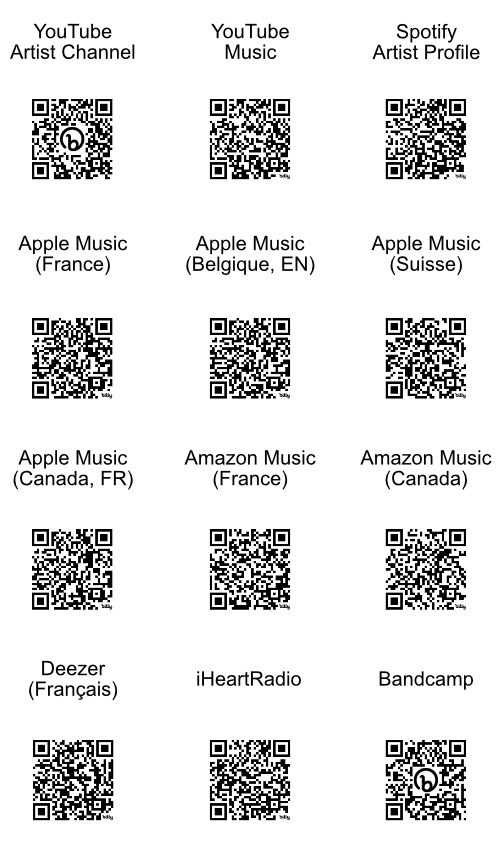
Jean-Michel Serres Apfel Café Apfelsaft Cinema Music QR Codes Centre Français 2024.