Notes on Charles Gounod and His Works

Overview

Charles Gounod (1818-1893) was a French composer famous for his operas, sacred works and choral music. Born in Paris into a family of artists – his mother was a pianist and his father a painter – he showed musical talent from an early age. He entered the Paris Conservatoire where he studied composition under Fromental Halévy. In 1839, he won the prestigious Prix de Rome, which enabled him to spend several years in Italy. It was there that he discovered the music of Palestrina, which profoundly influenced his religious compositions.

Gounod is best known for his opera ‘Faust’ (1859), based on Goethe’s play, which remains one of the most popular works in the operatic repertoire. He also composed ‘Romeo and Juliet’ (1867), another operatic success. As well as opera, he wrote many religious works, including the famous ‘Messe solennelle de Sainte-Cécile’ and the famous ‘Ave Maria’, based on the first prelude of Bach’s Well-Tempered Clavier.

Although Gounod went through difficult periods, particularly due to his personal conflicts and his vacillations between secular and religious music, he remained a major figure in 19th-century French music. He died in 1893 and is buried in the Auteuil cemetery in Paris.

History

Charles Gounod was born on 17 June 1818 in Paris, into a family of artists. His father, François-Louis Gounod, was a painter and his talent for the arts had already left its mark on the family. His mother, Victoire Lemachois, was a pianist and music teacher, and it was she who introduced Charles to music from an early age. After the premature death of his father, music became a refuge for Gounod and a growing passion.

From a very early age, Charles showed remarkable aptitude for composition and the piano. His devoted and perceptive mother encouraged him to pursue serious musical studies. He entered the Paris Conservatoire, where he studied composition under Fromental Halévy and counterpoint with Pierre Zimmermann, whose daughter he later married. Gounod’s talent quickly came to the fore, and in 1839 he won the prestigious Prix de Rome. This award earned him a three-year stay at the Villa Medici in Rome, where he immersed himself in Italian music, particularly that of Palestrina, which had a lasting influence on his style, especially in his religious works.

It was in Rome that Gounod discovered a deep inclination for spirituality. Fascinated by sacred music, he even considered becoming a priest. On his return to Paris, he hesitated for a long time between a religious vocation and a musical career. For a time, he served as an organist and choirmaster, writing fervent masses and motets. However, the call of opera and secular music was too strong to ignore.

The turning point in his career came in 1859, when he presented his opera ‘Faust’ in Paris. Inspired by Goethe’s masterpiece, the opera was a resounding success and propelled Gounod to the top of the European music scene. Faust quickly became a mainstay of the operatic repertoire, acclaimed for its melodic richness, expressive characters and spellbinding theatricality. Yet despite this triumph, Gounod remained a man torn between the sacred and the secular. This duality was reflected in his oeuvre, where passionate operas stood alongside religious compositions suffused with devotion.

Gounod enjoyed further success with operas such as ‘Roméo et Juliette’ (1867), which confirmed his reputation as a master of operatic melody. However, his career was punctuated by personal trials and spiritual crises. During a stay in England in the 1870s, he developed a complex relationship with a singer, Georgina Weldon, which caused scandals and darkened this period of his life. He died on 18 October 1893 in Saint-Cloud, leaving behind a rich and varied musical legacy. Even today, his work continues to fascinate with its ability to combine dramatic intensity and spiritual purity, bearing witness to the depth of an artist in search of beauty and truth.

Chronology

1818 — Birth in Paris

Charles-François Gounod was born on 17 June 1818 in Paris into a family of artists. His father, François-Louis Gounod, was a painter, and his mother, Victoire Lemachois, was a pianist and music teacher. After the death of his father in 1823, his mother took charge of his musical education and developed his precocious talent.

1829 — First contacts with music

At the age of 11, Charles entered the Lycée Saint-Louis, where he pursued a classical education while continuing his musical studies. Passionate about music, he took piano lessons with his mother and began to show exceptional talent.

1836 — Entry to the Paris Conservatoire

At the age of 18, Gounod enrolled at the Paris Conservatoire, where he studied composition with Fromental Halévy and counterpoint with Pierre Zimmermann. Zimmermann later became his father-in-law when Gounod married his daughter.

1839 — Prix de Rome

Gounod wins the Prix de Rome with his cantata Fernand, a prestigious award that allows him to stay at the Villa Medici in Rome for three years. This stay will be decisive for his musical development, as he discovers the polyphonic music of Palestrina, which will have a profound effect on his religious work.

1840-1842 — Stay in Rome and fascination with sacred music

During his stay in Rome, Gounod immersed himself in sacred music and even considered becoming a priest. He composed religious works influenced by the style of Palestrina. After his time in Italy, he also visited Germany, where he discovered the works of Bach and Beethoven, which influenced his music.

1843 — Return to Paris and hesitation between the priesthood and music

Back in Paris, Gounod became organist and choirmaster at the Church of Foreign Missions. He considered joining the clergy for a time, but ultimately gave up this vocation to devote himself fully to composing music.

1851 — First opera: Sapho

Gounod made his debut in the world of opera with Sapho, but the work received a mixed reception. However, this did not discourage the young composer, who persevered on the opera path.

1859 — Triumph with Faust

The great turning point in his career came with the premiere of ‘Faust’ in Paris, inspired by Goethe’s tragedy. The work was a huge success and propelled Gounod to the top of the French and European opera scene. ‘Faust’ quickly became one of the most performed operas in the world.

1867 — Success confirmed with Roméo et Juliette

Eight years after Faust, Gounod enjoyed another success with Roméo et Juliette, based on Shakespeare’s tragedy. The work was praised for its melodic beauty and dramatic sensitivity.

1870 — Exile in England and personal turmoil

Following the Franco-Prussian War and the fall of the Second Empire, Gounod went into exile in England. He remained there for several years, during which time he had an ambiguous relationship with the singer Georgina Weldon, which led to controversy and tension.

1874 — Return to France and sacred music

Back in France, Gounod returned to his first love, sacred music. He composed numerous religious works, including masses and oratorios, seeking to find a form of inner peace.

1885 — Composition of Mors et Vita

The oratorio ‘Mors et Vita’ marks a high point in his sacred output. This grandiose work bears witness to the spiritual quest that never left Gounod.

1893 — Death in Saint-Cloud

Charles Gounod died on 18 October 1893 in Saint-Cloud, at the age of 75. He left behind a rich musical legacy, oscillating between the dramatic passions of his operas and the religious fervour of his sacred works. He was buried in the Auteuil cemetery in Paris.

Characteristics of the music

Charles Gounod’s music is characterised by a profound duality between the sacred and the secular, reflecting his own spiritual hesitations. It is distinguished by great expressiveness, remarkable melodic sensitivity and a constant search for beauty and emotion. The main characteristics that define his style are as follows:

🎵 1. Refined melodic lyricism

Gounod was above all an exceptional melodist. His vocal lines are often elegant, fluid and expressive, whether in his operas or in his religious works. He knew how to capture emotion through simple but deeply touching melodies. This quality is particularly evident in arias such as ‘Ah! je ris de me voir si belle’ (Marguerite’s aria in Faust) or ‘Je veux vivre’ (Juliet’s aria in Romeo and Juliet).

🎭 2. A masterful dramatic sensibility

In his operas, Gounod favours a subtle dramatic approach, emphasising the psychology of the characters. His works are not just vocal demonstrations: they delve into the inner torments of the protagonists, offering moments of great emotional intensity. In ‘Faust’, for example, Marguerite’s evolution, torn between love, guilt and redemption, is portrayed with remarkable finesse.

🙏 3. Profound religious inspiration

Marked by his stay in Rome and his admiration for Palestrina, Gounod developed a sacred style characterised by sobriety and spirituality. His religious works, such as the ‘Messe solennelle de Sainte-Cécile’ or the oratorio ‘Mors et Vita’, are characterised by pure harmonies, majestic choral lines and a sense of contemplation. His famous ‘Ave Maria’, based on Bach’s first prelude, perfectly illustrates this fusion of simplicity and spiritual elevation.

🎼 4. Balanced and expressive orchestration

Gounod knew how to use the orchestra with finesse to support the singing without ever overwhelming it. His orchestrations are generally delicate, with particular attention paid to instrumental colours and dynamic nuances. He often favours soft and airy textures that highlight the voice, while adding dramatic touches at the right moment.

🎹 5. A classical and contrapuntal influence

The influence of Bach and Palestrina can be found in Gounod’s contrapuntal writing, especially in his sacred works. He skilfully mixes classical and romantic elements, integrating traditional forms while bringing new expressiveness to them.

🎶 6. Simple but effective harmonies

Gounod never sought harmonic complexity for its own sake. His harmonies are often simple, but they always serve the emotion and the text. This sobriety gives his music a clarity and accessibility that have contributed greatly to his success.

💔 7. A balance between sensuality and spirituality

One of Gounod’s great strengths is his ability to combine sensuality and spirituality, sometimes within the same work. In Faust, for example, Faust’s passionate outbursts contrast with Marguerite’s purity and devotion, creating a powerful dramatic tension.

In short, Gounod’s music stands out for its ability to touch the soul through haunting melodies, careful orchestration and an emotional approach that is both intimate and grandiose. Whether through his passionate operas or his serene religious works, Gounod created a musical universe of great emotional and spiritual richness.

Impacts & Influences

Charles Gounod’s legacy extends far beyond his own era. His influence has spanned several generations of composers, in both opera and sacred music. Thanks to his exceptional melodic sense and his ability to fuse the sacred and the secular, Gounod has left a lasting mark on French and international music. Here are the main impacts and influences of his work:

🎭 1. A turning point in French opera

With ‘Faust’ (1859), Gounod marked a turning point in French romantic opera. At a time when the great historical operas dominated, Gounod preferred to focus on the intimate feelings and psychology of the characters. His dramatic approach, based on the delicacy of emotions and melodic beauty, paved the way for a new style of French opera, more lyrical and introspective. This influence can be found in composers such as Jules Massenet (Manon, Werther), who inherited this sensitivity that is both elegant and expressive.

🎶 2. A master of lyrical melody

Gounod’s ability to create memorable melodies has left a profound mark on the operatic repertoire. His arias, such as ‘Ah! je ris de me voir si belle’ (jewellery aria in Faust) or ‘Je veux vivre’ (Romeo and Juliet), have become iconic and have influenced generations of composers, including those of operetta and musical comedy. His way of showcasing the voice while maintaining a fluid and natural melodic line inspired composers such as Georges Bizet (Carmen), who admired his sense of drama and melody.

🙏 3. A revival of sacred music

Gounod played a major role in the revival of sacred music in the 19th century. At a time when French religious music had lost its vitality, he reintroduced a style imbued with simplicity, emotion and spirituality. His ‘Messe solennelle de Sainte-Cécile’ and his ‘Ave Maria’ (adapted from Bach’s prelude) left their mark on generations of organists, choristers and composers of sacred music. His influence was felt by Gabriel Fauré, whose Requiem adopts a more intimate and contemplative tone, in the tradition of Gounod.

🎼 4. Influence on late Romantic composers

Gounod’s orchestral finesse and dramatic sensitivity also influenced composers such as Camille Saint-Saëns and Jules Massenet, who adopted his manner of reconciling lyricism and psychological drama. Saint-Saëns, in particular, admired Gounod’s ability to marry classical harmonies with romantic expressiveness, a balance he himself sought to achieve in his works.

🎹 5. The legacy in piano music and adaptations

Gounod’s ‘Ave Maria’, based on Bach’s Prelude in C major, has become one of the most popular works in the classical repertoire, often arranged for various ensembles. The piece has inspired countless adaptations and demonstrated how a Romantic composer could enrich a classical structure while adding contemporary emotion. This approach influenced musicians such as Franz Liszt, who admired the way Gounod connected the past and the present.

📚 6. Inspiration for composers of the late 19th and 20th centuries

Gounod also left his mark on composers at the turn of the 20th century. Claude Debussy, although inclined towards more radical innovations, recognised Gounod’s importance in the transition to a more expressive and subtle style. His concern for vocal colour and emotional intimacy also found an echo in Maurice Ravel, who appreciated the delicacy of Gounod’s harmonies.

🎤 7. A role model for singers and performers

Thanks to his fluid and expressive vocal writing, Gounod became a model for opera singers. His ability to balance technique and expressiveness helped set standards for operatic performance in the 19th century. Singers such as Enrico Caruso and Maria Callas immortalised his works, helping to perpetuate his influence in the operatic repertoire.

✨ 8. Lasting impact on popular culture

Beyond the classical world, Gounod’s music has infiltrated popular culture. The ‘Ave Maria’ has been covered and adapted in numerous films, advertisements and events, helping to make his name known far beyond traditional musical circles.

In short, Charles Gounod not only enriched French music with his lyrical and spiritual sensibility, but he also left a profound legacy that continues to inspire composers, singers and performers across the centuries. His work remains a bridge between classical tradition and romantic expressiveness, bearing witness to a constant search for emotion and beauty.

Relations

Charles Gounod’s relationships with his entourage, whether composers, performers, conductors or non-musical personalities, played a major role in the development of his career and in the evolution of his musical style. Some of these relationships were characterised by mutual admiration, while others were marked by tension and even controversy. Here is an overview of Gounod’s most notable relationships:

🎼 1. Hector Berlioz – An ambivalent relationship

The relationship between Gounod and Hector Berlioz was complex. Berlioz, an emblematic figure of French Romanticism, admired Gounod’s melodic talent but had reservations about his penchant for harmonic simplicity and his more measured dramatic approach. Although Berlioz initially supported Gounod during the premiere of Faust, he later criticised the work, judging it to be too sentimental and lacking in dramatic power. For his part, Gounod respected Berlioz, but their profoundly different musical aesthetics kept them at a distance.

🎵 2. Camille Saint-Saëns — An admiring but critical disciple

Camille Saint-Saëns saw Gounod as a major figure in French music and admired his melodic talent. He was influenced by his sense of harmony and his ability to fuse tradition and romantic expressiveness. However, Saint-Saëns sometimes criticised Gounod’s tendency to oscillate between the sacred and the profane, seeing it as a form of artistic indecision. Despite these differences, Saint-Saëns always recognised Gounod’s essential contribution to the revival of French opera.

🎤 3. Pauline Viardot – An inspiring performer and muse

The famous mezzo-soprano Pauline Viardot played a key role in Gounod’s career. Gifted with great musical intelligence and an expressive voice, she created several roles in Gounod’s works and contributed to their success. Viardot fervently defended Gounod’s works, notably ‘Sapho’, his first opera, and remained a faithful ally throughout his career. Her deep understanding of Gounod’s music and her influence in Parisian artistic circles provided her with invaluable support.

🎭 4. Georgina Weldon — A tumultuous relationship in England

One of Gounod’s most controversial relationships was with Georgina Weldon, an eccentric and ambitious English opera singer. During his exile in England in the 1870s, Gounod formed a close relationship with Weldon, who became his patron and took him into her home. However, their relationship quickly turned into a scandal. Weldon accused Gounod of trying to abruptly end their association, which led to a high-profile legal battle. This episode temporarily tarnished Gounod’s reputation and forced him to return to France.

📚 5. Félicité de Lamennais — Spiritual and intellectual influence

The philosopher and writer Félicité de Lamennais exerted a profound spiritual influence on Gounod, particularly at a time when the composer was considering becoming a priest. Lamennais, a devout Catholic and committed thinker, inspired Gounod in his spiritual quest and his reflection on sacred music. This relationship marked the composition of major religious works, such as the ‘Messe solennelle de Sainte-Cécile’, which bears witness to this aspiration to transcendence.

🎹 6. Franz Liszt — Mutual respect

Franz Liszt, piano virtuoso and visionary composer, had a respectful relationship with Gounod. Liszt appreciated Gounod’s melodic sense and his talent for vocal music. When he discovered Gounod’s ‘Ave Maria’, based on Bach’s Prelude in C major, he hailed it as a masterpiece of elegance and simplicity. Liszt played an indirect role in the dissemination of Gounod’s works in Central Europe, helping them to spread beyond France.

👑 7. Napoleon III and Empress Eugénie – Official Support

The support of Napoleon III and Empress Eugénie was crucial to Gounod’s career. The Empress, a great music lover, was particularly fond of the composer’s religious and lyrical works. Thanks to her patronage, Gounod received important commissions, notably for masses and works for official ceremonies. This support contributed to Gounod’s institutional recognition as a leading composer.

🎤 8. Enrico Tamberlik — Renowned tenor and performer of Faust

The famous tenor Enrico Tamberlik was one of the first major performers of Gounod’s works. He created the title role of Faust and contributed greatly to the international dissemination of the work. Tamberlik, with his powerful and expressive voice, was able to embody the character with a dramatic intensity that made Faust a resounding success.

🎨 9. Jean-Léon Gérôme — An influential painter friend

The painter Jean-Léon Gérôme, famous for his academic works, was one of Gounod’s close friends. Although their art belonged to different disciplines, their shared sense of aesthetics and the pursuit of classical beauty brought them together. This friendship allowed Gounod to expand his social and artistic circle beyond the musical world.

✨ 10. Gabriel Fauré — A spiritual legacy

Gabriel Fauré, although younger, considered Gounod a guiding figure. Fauré admired Gounod’s ability to combine melodic simplicity with deep spirituality. Although Fauré developed his own musical language, more modern and subtle, his Requiem displays a contemplative approach that owes much to Gounod’s influence.

In short, Charles Gounod had a rich and varied relationship, ranging from deep artistic friendships to significant professional collaborations, but also to tensions and controversies that sometimes tarnished his image. These interactions shaped his musical journey, contributing to his artistic evolution and his lasting place in the history of music.

Similar composers

If you enjoy the music of Charles Gounod, you will find similar elements in the work of several composers, in their melodic sense, their dramatic lyricism and their balance between sacred and secular music. Here are a few composers whose work shares similarities with that of Gounod:

🎵 1. Jules Massenet (1842-1912)

Massenet is undoubtedly the composer closest to Gounod in terms of style and influence. Like Gounod, Massenet excelled in lyrical writing, emphasising refined expressiveness and touching melodies. His operas such as ‘Manon’, ‘Werther’ and ‘Thaïs’ share the dramatic sensitivity and orchestral finesse found in Gounod’s work. Massenet was also influenced by Gounod’s spiritual heritage in his religious works.

🎭 2. Georges Bizet (1838-1875)

Although Bizet is best known for ‘Carmen’, his melodic approach and dramatic sense show affinities with Gounod. Bizet, like Gounod, knew how to capture human emotions through subtle orchestration and expressive vocal lines. His ‘Symphonie en ut’ and some of his lesser-known operas, such as ‘Les pêcheurs de perles’, recall Gounod’s melodic grace and balance between lyricism and drama.

🙏 3. Gabriel Fauré (1845-1924)

Although Fauré developed a more modern musical language, his attachment to elegant writing and his harmonic sensitivity are reminiscent of Gounod, especially in his religious works. Fauré’s ‘Requiem’, with its gentleness and contemplative spirituality, reflects a direct influence of Gounod’s sacred style. Fauré also shared with Gounod a propensity for simple and expressive melody, full of emotion.

🎼 4. Camille Saint-Saëns (1835-1921)

Saint-Saëns, a contemporary of Gounod, had a more academic and symphonic style, but he shared with him a taste for the balance between tradition and innovation. His opera ‘Samson and Delilah’ demonstrates a dramatic sensibility similar to that of Gounod, with moments of intense lyricism. Saint-Saëns, although more oriented towards instrumental music, admired Gounod’s ability to marry melodic simplicity with profound expressiveness.

🎶 5. Ambroise Thomas (1811-1896)

Composer of famous operas such as ‘Mignon’ and ‘Hamlet’, Ambroise Thomas shared with Gounod a predilection for literary subjects and a fluid melodic approach. His operas, although sometimes more academic, have moments of lyricism that recall Gounod’s dramatic sensibility.

🎹 6. Franz Liszt (1811-1886)

Although Liszt is best known for his piano works, he deeply admired Gounod and his sense of melody. Liszt also arranged Gounod’s ‘Ave Maria’, which testifies to their mutual respect. Some of Liszt’s Lieder share this tenderness and search for sincere emotion found in Gounod’s work.

🎵 7. Charles-Marie Widor (1844-1937)

Although Widor is mainly known for his organ works, he also composed operas and masses that bear the stamp of Gounod’s style. His sacred music, notably the ‘Mass for Two Choirs’, sometimes evokes Gounod’s solemnity and spiritual purity.

🎭 8. Giacomo Meyerbeer (1791-1864)

Although Meyerbeer is more closely associated with French grand opera, some of his works, with their lyrical impulses and sense of drama, bear similarities to Gounod’s early operas. His attention to orchestral detail and his mastery of dramatic moods are common with Gounod’s style.

🎶 9. Léo Delibes (1836-1891)

Known for his ballets ‘Coppélia’ and ‘Sylvia’, as well as his opera ‘Lakmé’, Delibes shared with Gounod a refined sense of melody and delicate orchestration. Delibes’ graceful lyricism and his ability to create enchanting atmospheres are reminiscent of Gounod’s musical sensitivity.

🎤 10. Richard Wagner (1813-1883) — A controversial influence

Although very different stylistically, Wagner exerted an indirect influence on Gounod, particularly in the treatment of drama and the search for a balance between music and theatre. Gounod, while remaining attached to the French tradition, was not unaware of Wagner’s innovations, which discreetly influenced some of his orchestral and dramatic choices.

In short, these composers share with Charles Gounod a taste for lyricism, dramatic finesse and a deep quest for expressiveness, whether in the field of opera, sacred music or orchestral music. Their works constitute a beautiful exploration of the romantic and post-romantic musical universe, in the continuity of the legacy left by Gounod. 🎶

Famous works for solo piano

Although Charles Gounod is mainly known for his operas, sacred music and melodies, he also composed a few works for solo piano, even if they remain less famous than his lyrical repertoire. These piano pieces often reflect Gounod’s characteristic melodic sensitivity and harmonic elegance. Here are the most notable works:

🎹 1. Marche funèbre d’une marionnette (1872)

Probably Gounod’s most famous work for solo piano. Originally written for piano in 1872, it was later orchestrated by the composer. This piece, full of irony and humour, evokes the march of a puppet heading towards its grave. It became world famous when Alfred Hitchcock used it as the theme music for his television programme ‘Alfred Hitchcock Presents’.

🎼 2. Suite in the old style

This suite is a charming work for piano, written in a neoclassical style reminiscent of baroque forms, while infusing it with a romantic delicacy unique to Gounod. Although less well known, it testifies to his interest in the styles of the past and his love for Bach.

🙏 3. Meditation on Bach’s 1st Prelude (1859) – ‘Ave Maria’

Gounod’s ‘Ave Maria’, based on the Prelude in C major from Johann Sebastian Bach’s Well-Tempered Clavier, was first arranged for piano and voice, but there are also versions for solo piano. This work, of great simplicity and profound emotion, is often played as a meditation piece.

🎵 4. Waltz for Two Hands

This elegant little waltz illustrates Gounod’s taste for light and graceful forms. It reflects his talent for the delicate and flowing melodies typical of 19th-century Parisian salons.

🎹 5. Gounod’s Carnival (Carnival for Piano)

A series of short, light pieces, composed in a playful and entertaining spirit. This work, although rarely performed today, highlights the humour and lightness that Gounod sometimes liked to incorporate into his music.

🎶 6. Second Mazurka

Gounod, inspired by the fashion for Polish dances, composed a mazurka for piano in the Romantic tradition. Although less well known than Chopin’s works, this mazurka testifies to his interest in dance forms and his talent for pianistic colour.

🎼 7. Romances without words (sometimes adapted for solo piano)

Some of Gounod’s romances, although often composed for voice and piano, have been arranged for solo piano. These melodious, simple but expressive pieces are a good reflection of the composer’s melodic sensibility.

🎹 8. Variations on an Original Theme

This work demonstrates Gounod’s skill in exploring variations on a theme, with delicate modulations and elegant piano writing.

Although his piano works are not as well known as his operas or sacred works, they reveal a more intimate and elegant side of Charles Gounod, testifying to his love of melodic simplicity and refined harmony. 🎶

Famous operas

Charles Gounod is best known for his operas, which left their mark on the French opera scene in the 19th century. His works combine refined lyricism, elegant orchestration and a keen sense of drama. These are Gounod’s most famous operas:

🎭 1. Faust (1859)

Undoubtedly Gounod’s most famous opera, ‘Faust’ is inspired by Goethe’s tragedy. This five-act opera tells the story of Doctor Faust, who makes a pact with Mephistopheles to regain his youth and seduce Marguerite. With famous arias such as Marguerite’s ‘Air des bijoux’ (Ah! je ris de me voir si belle en ce miroir) and the ‘Chœur des soldats’, this opera has become a pillar of the world opera repertoire.

🎭 2. Roméo et Juliette (1867)

Inspired by the tragedy of William Shakespeare, this opera in five acts sets to music the tragic story of the lovers of Verona. The work is famous for its magnificent love duets, notably ‘O nuit divine’ and the sublime ‘Je veux vivre’ sung by Juliette. This opera, full of lyricism and passion, remains one of the most successful musical adaptations of Shakespeare’s masterpiece.

🎭 3. Mireille (1864)

Based on the epic poem by Frédéric Mistral, ‘Mireille’ tells the tragic story of thwarted love in rural Provence. This opera is famous for its delicate evocation of Provençal nature and traditions, with touching arias such as ‘Heureux petit berger’ and ‘La légende de Magali’. Although less frequently performed than Faust or Romeo and Juliet, Mireille testifies to Gounod’s melodic sensitivity and attachment to local folklore.

🎭 4. Sapho (1851)

Gounod’s first opera, ‘Sapho’ is inspired by the life of the famous Greek poetess. Although the work met with modest success at its premiere, it revealed Gounod’s dramatic talent and his ability to express intense emotions. The aria ‘Ô ma lyre immortelle’, sung by Sapho, is one of the most memorable moments of the work.

🎭 5. La Reine de Saba (The Queen of Sheba, 1862)

This exotic opera is inspired by the biblical legend of the Queen of Sheba and her journey to meet King Solomon. Although the work was not a lasting success, certain arias such as ‘Inspirez-moi, race divine’ are still admired for their musical richness and dramatic intensity.

🎭 6. Le Médecin malgré lui (The Doctor in Spite of Himself, 1858)

Based on Molière’s comedy, this comic opera in three acts is a lighter and more humorous work. The plot revolves around Sganarelle, a carpenter forced to pretend to be a doctor. This musical comedy highlights Gounod’s skill in handling comedy and lightness, with tunes full of wit and vivacity.

🎭 7. Polyeucte (1878)

Inspired by the tragedy of Corneille, ‘Polyeucte’ is a lyric drama that explores the themes of Christian martyrdom and sacrifice. Although the opera was not as successful as expected at its premiere, it is now recognised for its spiritual depth and musical beauty.

🎭 8. Cinq-Mars (1877)

This historical opera, inspired by the novel by Alfred de Vigny, tells the story of the adventures of Cinq-Mars, a nobleman involved in a conspiracy against Cardinal Richelieu. Although not often performed today, it presents a beautiful combination of political drama and musical romanticism.

🎭 9. Philémon et Baucis (1860)

A comic opera inspired by Greek mythology, Philémon et Baucis is a light and charming work featuring the gods Jupiter and Vulcan. Although rarely performed, this work demonstrates Gounod’s talent for combining humour with musical finesse.

🎭 10. La Nonne sanglante (The Bloody Nun, 1854)

This fantastical opera, based on a Gothic novel, tells a story of ghosts and curses. Despite a mixed reception at its premiere, La Nonne sanglante has recently been rediscovered and praised for its dark atmosphere and captivating lyricism.

Although ‘Faust’ and ‘Roméo et Juliette’ remain Gounod’s most performed works, his other operas offer a rich palette of styles and emotions, revealing the diversity of his lyrical talent. 🎶

Famous works

Charles Gounod is best known for his operas and a few piano works, but he also left an important legacy in other genres, including sacred music, vocal music and orchestral music. Here are Gounod’s most famous works apart from operas and piano pieces:

🎵 1. Ave Maria (1859)

Gounod’s ‘Ave Maria’, based on Johann Sebastian Bach’s Prelude in C major (BWV 846), is undoubtedly one of his most famous works. Originally composed for voice and piano, it has been transcribed in numerous versions for different instruments and ensembles. This gentle and spiritual meditation has become a staple of the sacred repertoire.

🙏 2. Solemn Mass of Saint Cecilia (1855)

Also known as the ‘Mass of Saint Cecilia’, this is a monumental work that marked Gounod’s return to sacred music after his initial successes in opera. Of great spiritual beauty and striking orchestral richness, it is famous for its lyrical passages such as the ‘Sanctus’ and the ‘Agnus Dei’.

🎶 3. Oratorio: Mors et Vita (1885)

Following his success with ‘La Rédemption’, Gounod composed ‘Mors et Vita’, a three-part oratorio that explores the themes of death, judgement and eternal life. This monumental work, rarely performed today, testifies to Gounod’s spiritual depth.

🎼 4. Oratorio: La Rédemption (1882)

‘La Rédemption’ is a dramatic oratorio that sets the Passion and Resurrection of Christ to music. Divided into three parts, this majestic and contemplative work testifies to Gounod’s deep faith and his talent for sacred music.

🎵 5. Messe brève n°7 aux chapelles (1890)

This short mass, designed for simpler liturgical performances, retains the grace and fervour typical of Gounod’s sacred music. It is appreciated for its melodic beauty and accessible character.

🎤 6. Sérénade (1857)

The ‘Sérénade’ is a melody for voice and piano that illustrates Gounod’s taste for refined and expressive melodic lines. It is often performed as a recital piece, highlighting the sweetness and elegance of his vocal writing.

🎻 7. Petite Symphonie for wind instruments (1885)

This Petite Symphonie is one of Gounod’s rare forays into pure orchestral music. Composed for a wind ensemble, it highlights the clarity of his writing and his sense of instrumental balance.

🎵 8. Hymne à Sainte Cécile (1874)

This hymn in honour of Saint Cecilia, patron saint of musicians, is a testament to Gounod’s deep piety and his attachment to sacred music. It is often performed at religious celebrations.

🎤 9. Le Vin des amants (1868)

This melody for voice and piano, based on a poem by Charles Baudelaire, is one of Gounod’s most expressive works in the field of French melody. It reflects his ability to capture the poetic and emotional nuances of a text.

🎶 10. Gallia (1871)

‘Gallia’ is a lament for soprano, choir and orchestra, written in reaction to France’s defeat in the Franco-Prussian War. This patriotic and poignant work expresses the pain and resilience of a people.

🎼 11. Pontifical March (1869)

Composed for Pope Pius IX, the ‘Marche Pontificale’ is a solemn piece often performed at official ceremonies at the Vatican.

🎵 12. The Seven Last Words of Christ on the Cross (1855)

This meditative work for choir, soloists and orchestra sets to music the last words of Christ before his death. Gounod deploys a musical language imbued with gravity and devotion.

🎤 13. Hymn to the Night (1870)

This lyrical, gentle and contemplative work is often performed by amateur or professional choirs. It illustrates a peaceful and spiritual atmosphere.

Although Gounod is mainly known for his operas and his ‘Ave Maria’, these works show the diversity of his talent, ranging from sacred music to orchestral compositions and refined melodies. 🎶

Activities outside composition

In addition to composing music, Charles Gounod (1818-1893) was involved in several other remarkable activities:

🎼 Conductor and musical director

Gounod conducted performances of his own works and those of other composers. In particular, he conducted concerts and choirs, which allowed him to showcase his artistic sensibility beyond composition.

✍️ Writer and essayist

Gounod also left literary and philosophical writings. He published several works, including ‘Mémoires d’un artiste’ in 1896, in which he shared his reflections on music, faith and artistic life. His writings show a deeply cultivated and meditative spirit.

🎨 Painting and drawing

Although less well known for this, Gounod had an interest in the visual arts. He occasionally practised drawing and painting, demonstrating a broad artistic sensibility.

🙏 Religious commitment

Gounod was a man of deep faith. For a time, he even considered becoming a priest and spent several months in a monastery after the death of his father. This spirituality influenced much of his work, particularly his religious compositions such as ‘The Mass of St Cecilia’.

🇬🇧 Stay in England and cultural influence

During the Franco-Prussian War (1870), Gounod went into exile in England, where he spent almost five years. During this period, he became involved in the British music scene, composing works for English choirs and developing cultural links with local artistic circles.

🎭 Influence in theatre and opera

In addition to his own operas such as ‘Faust’ and ‘Romeo and Juliet’, Gounod played a role in promoting French opera and the evolution of the operatic genre in the 19th century.

These activities bear witness to the intellectual and artistic richness of Gounod, who distinguished himself far beyond his role as a composer. 🙂

Episodes and anecdotes

Here are some fascinating episodes and anecdotes about Charles Gounod:

🎹 A musical revelation thanks to Mozart

As a child, Gounod attended a performance of Mozart’s ‘Don Giovanni’. It was a real revelation for him! He later said that this work had overwhelmed him to the point of deciding his musical future. He had a deep admiration for Mozart throughout his life, which greatly influenced his melodic style.

📚 The call to the priesthood: an unexpected detour

After studying at the Paris Conservatory, Gounod seriously considered becoming a priest. He even entered the Saint-Sulpice seminary and spent several months in a monastery. During this period, he became interested in theology, studied the writings of the Church Fathers and composed religious works. In the end, music took over again, but this spirituality left a lasting mark on his work, particularly in pieces such as ‘The Mass of Saint Cecilia’.

🇮🇹 A stay in Rome and admiration for Palestrina

In 1839, Gounod won the Prix de Rome, which allowed him to stay at the Villa Medici for two years. In Rome, he fell under the spell of the sacred music of Palestrina, master of polyphony. This fascination influenced his choral writing and his religious sensibility.

🎭 A ‘Faust’ that almost became… ‘Marguerite’

When Gounod was working on ‘Faust’, his most famous opera, he initially considered calling it ‘Marguerite’, as he wanted to emphasise the heroine and her tragic destiny. It was only at the request of his collaborators that the work finally took the name ‘Faust’, in reference to the main character of the myth.

🎤 A ‘Faust’ that almost never saw the light of day

The premiere of ‘Faust’ in 1859 was not an immediate triumph. The public reception was initially lukewarm, and the work took time to establish itself. It was only after several revivals with modifications that the opera became a worldwide success. Today, ‘Faust’ is one of the most frequently performed works in the operatic repertoire.

🇬🇧 Exile in England and unexpected success

During the Franco-Prussian War of 1870, Gounod took refuge in England, where he spent almost five years. There, he found new inspiration and became a highly regarded composer. He composed choral works for English ensembles, including ‘Gallia’, a patriotic lament on the French defeat. He was also admired by London high society.

🎼 Divine inspiration for ‘Ave Maria’

One of his most famous works, “Ave Maria”, is in fact a melodic adaptation of Bach’s “Prelude in C major”. Gounod first improvised this melody on a friend’s piano and then added it to the prelude. This marriage between Bach and Gounod has become one of the most frequently played pieces at weddings and religious ceremonies.

😄 A funny slip of the tongue in front of Napoleon III

When he was introduced to Napoleon III, Gounod, impressed by the emperor, is said to have said to him:
‘Sire, I am delighted to see you sitting on the throne of your ancestors.’
The problem? Napoleon III was not the direct descendant of Napoleon I, but his nephew. This sentence caused a moment of embarrassment among the courtiers!

🎶 An amusing jealousy towards Bizet

Gounod was impressed by Georges Bizet, his former student. When ‘Carmen’ began to gain notoriety, Gounod could not help but express some annoyance at seeing his young protégé outshine him. He is even said to have said:
‘That devil Bizet stole my ideas!’
Of course, he nevertheless recognised Bizet’s exceptional talent.

These anecdotes reveal a passionate, perfectionist Gounod, who was sometimes unpredictable, but always deeply human and sensitive. 😊

(This article was generated by ChatGPT. And it’s just a reference document for discovering music you don’t know yet.)

Classic Music Content Page

Best Classical Recordings
on YouTube

Best Classical Recordings
on Spotify
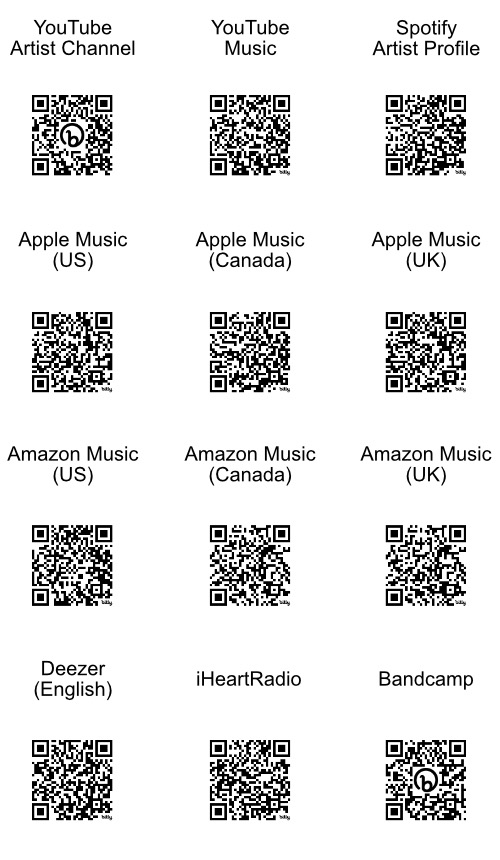
Jean-Michel Serres Apfel Café Music QR Codes Center English 2024.

Notes on Jean Cras and His Works

Overview

Jean Cras (1879-1932) was a French composer and naval officer whose life and work reflect a fascinating balance between his military career and his passion for music. Born in Brest into a family of officers, he followed in his father’s footsteps by entering the Naval Academy, where he quickly distinguished himself. However, his musical vocation was just as strong. He received advice from the composer Henri Duparc, who became his mentor and encouraged him to pursue his musical talent.

Military and musical career

During his missions around the world, Cras found inspiration to enrich his compositions. His career in the navy profoundly influenced his art, enabling him to discover diverse cultures that nourished his music with an original harmonic and rhythmic richness. He finally reached the rank of rear admiral and even invented a navigation system (the ‘Cras rule’) that is still used today.

Musical work

Jean Cras‘ style is characterised by a subtle fusion of impressionism and exotic influences, with refined harmonies and a captivating melodic sense. His best-known works include:

‘Polyphème’ (1922), an opera with a libretto by Albert Samain, acclaimed for its lyrical beauty.

Chamber music, particularly his Quintet for harp, flute, violin, viola and cello, which illustrates his harmonic refinement.

Piano works, melodies and orchestral compositions that reflect the diversity of his inspirations.

Legacy

Jean Cras remains a unique figure in French music, admired for having been able to combine his career as an officer with a profound and sensitive musical talent. Although relatively unknown to the general public, he is now being rediscovered by classical music lovers for the originality and beauty of his work.

History

Jean Cras was a man of many facets, a sailor deeply attached to the sea and a composer whose soul resonated to the rhythm of the waves. Born in 1879 in Brest, a city facing the Atlantic, he grew up lulled by the stories of sailors and sea shanties. From a very young age, he showed an unwavering love for music, but fate decided otherwise. His father, a military doctor, passed on discipline and a sense of duty to him, and Jean Cras naturally turned to a career in the French Navy.

Yet music never left him. Even when he entered the Naval Academy, he continued to scribble down staves and compose in secret, his heart beating in time with the scales he imagined. It was during his missions, long crossings and distant stopovers that his inspiration was refined. The sounds of African ports, oriental melodies and the song of the sea permeated him, nurturing a unique musical language.

His meeting with the composer Henri Duparc was decisive. Duparc, amazed by the raw talent of the young officer, became his mentor and friend. He taught him the art of chiselling his ideas, of refining his musical writing to reveal all its poetry. Jean Cras, while climbing the ranks of the Navy, perfected his art, finding an almost miraculous balance between the demands of navigation and those of composition.

Cras reached the peak of his military career by becoming a rear admiral, but it was his music that allowed him to inscribe his name in eternity. His Symphony, his Quintet with harp and his opera Polyphemus bear witness to a rare sensitivity, where maritime, Breton and exotic influences intertwine to create a sound universe of incomparable richness.

Through his works, we perceive the sun’s sparkling reflections on the sea, the nostalgia of ports left behind and the breath of the wind carrying dreams towards unknown horizons. Jean Cras died in 1932, but his musical legacy, imbued with the beauty of the oceans he cherished so much, continues to resonate like an endless wave that keeps returning to caress the shores of time.

Chronology

Jean Cras, sailor and composer, lived a life in which the sea and music intertwined in perfect harmony. This is his story, told through the milestones of his life:

1879 – Born in Brest

Jean Cras was born on 22 May 1879 in this maritime city where the sea and the stories of sailors formed the backdrop to his childhood. The son of a Navy doctor, he grew up in an environment characterised by discipline, but also by a deep intellectual curiosity.

1896 – Entry to the Naval Academy

At the age of 17, he entered the Naval Academy in Brest, following in his father’s footsteps. Although he was passionate about the sea, his love of music never left him. He took his enthusiasm for composition with him everywhere he went, even during periods of rigorous training.

1899 – Start of his career as a naval officer

Jean Cras began his career in the French Navy as a midshipman. He sailed to the four corners of the world, discovering new cultures, exotic landscapes and sounds that would later enrich his musical language.

1900 – A decisive encounter with Henri Duparc

His meeting with Henri Duparc, the famous French composer, was a decisive turning point. Duparc recognised Cras’ talent and became his mentor, giving him valuable advice on how to perfect his musical writing. A deep friendship developed between the two men.

1901 – First significant compositions

Encouraged by Duparc, Jean Cras composed melodies and pieces for the piano. His style was already taking shape: a subtle blend of Impressionist influences and exotic colours inspired by his sea voyages.

1912 – Marriage to Marie-Madeleine Quemper de Lanascol

Jean Cras married Marie-Madeleine, a woman who provided him with unwavering support in his dual career. Together they started a family while sharing the demands of military life.

1914-1918 – First World War: a discreet hero

During the Great War, Cras served as a ship’s commander. In 1917, he took command of the Provence II, an auxiliary cruiser. He distinguished himself through his bravery and sense of duty, and received the Legion of Honour for his services.

1921 – Completion of his opera Polyphème

After years of meticulous work, he completed his opera Polyphème, inspired by Greek mythology. This masterful work, premiered in 1922, was acclaimed for its refined writing and dramatic power. The success of this opera established Jean Cras as a composer in his own right.

1928 – Appointed Rear Admiral

Jean Cras reached the highest ranks of the Navy, crowning an exemplary career. His discipline and dedication earned him the respect of his peers. Although busy with his military responsibilities, he still found time to compose, often in the cabins of his ships.

1930 – Completion of the Quintet with harp

One of his most famous works is created: his Quintet with harp, which combines Breton influences and marine sounds. This piece, imbued with poetry, is a testament to his musical mastery and innate sense of melody.

1932 – Death in Brest

Jean Cras died on 14 September 1932 in his home town, after having led an intense life in which the rigour of the sailor and the sensitivity of the composer were intertwined. His music, imbued with the emotions of his travels and seascapes, continues to resonate long after his death.

Legacy

Jean Cras leaves behind a unique musical legacy, in which the sea, Brittany and the cultures of the world come together in a symphony of emotions. His works, both subtle and powerful, continue to touch hearts, like an echo from the depths of the ocean that he loved so much.

Characteristics of the music

Jean Cras’ music is a reflection of the man he was: profound, refined and imbued with the vast horizons he explored throughout his career as a sailor. It stands out for its originality, combining French impressionist influences, Breton sounds and exotic colours gleaned from his travels. The following are the essential characteristics that define his musical universe:

🎵 A refined and subtle harmonic language

Jean Cras, trained under the benevolent eye of Henri Duparc, developed a harmonic style of great finesse. His music borrows from impressionists such as Debussy and Ravel, with rich chords, fluid modulations and evocative harmonic colours. He likes to explore unexpected harmonic progressions, creating atmospheres that are at times luminous, at times mysterious.

His works often have a modal feel, based on pentatonic scales or ancient modes, which gives them a timeless dimension. The harmony, always fluid and shifting, gives the impression of a journey, as if each note carried within it the memory of a distant port of call.

🌊 The influence of the sea: music with fluid movements

The sea is omnipresent in the music of Jean Cras. Having spent a large part of his life on the waves, he transposes this sensory experience into his works. There are harmonic undulations that evoke the swaying of the waves, fluid motifs that recall the rolling of ships, and slow movements that evoke the depth and majesty of the ocean.

In his Quintette avec harpe, for example, the crystalline arpeggios of the harp seem to reflect the sunlight on the water, while the strings draw patterns that mimic the ceaseless movements of the sea. This sensation of liquid and moving elements runs through many pages of his work.

🎼 A deep connection with Brittany and its traditions

A Breton through and through, Jean Cras also drew on the folklore of his native region. He incorporated melodies inspired by Breton songs, dance rhythms reminiscent of gavottes and traditional rondes, but without ever quoting them directly. These influences are never folkloric in the strict sense, but sublimated and reinterpreted in a personal language.

Le Journal de bord pour piano, for example, evokes memories of Brittany through its rhythms and motifs, while capturing the impressions left by distant stopovers. This fusion of Breton sounds and exotic influences gives his music a unique identity.

🌍 Touches of the exotic and faraway places

Jean Cras’ travels around the world enriched his musical imagination. His stopovers in Africa, the Orient and the Caribbean left a sound imprint on his compositions. He introduced asymmetrical rhythms, oriental motifs and modal colours evoking faraway lands.

In some of his works, we find scales and rhythms reminiscent of Arabic or African music, as in Polyphème, where oriental melodies colour the harmony with an exotic warmth. Cras does not merely quote these influences, he integrates them into a coherent and personal musical language.

🎶 A rich and expressive polyphonic style

Jean Cras excelled in the art of polyphony. His writing is often dense, with melodic lines that intertwine delicately, creating a rich and expressive texture. This mastery of polyphony gives his music an orchestral dimension even in his chamber music.

His melodies sing with great expressiveness, often carried by a vocal line that always seems to follow the natural breath. This is particularly noticeable in his melodies for voice and piano, where the vocal lines are remarkably fluid and emotionally intense.

🎭 Expressive and poetic dramaturgy

In his vocal works and his opera Polyphème, Jean Cras shows a keen sense of dramaturgy. He knows how to express human passions with poignant intensity. His melodies are often imbued with an underlying dramatic tension, where dynamic nuances and changes in harmony subtly emphasise the emotions.

🎯 A balance between classical structure and expressive freedom

Although Cras was deeply rooted in the French musical tradition, he never allowed himself to be confined by rigid frameworks. He maintained a classical formal structure, but his music exudes great freedom in its thematic developments and variations. This duality between rigour and spontaneity gives his works a remarkable balance.

✨ In short: music at the crossroads of worlds

Jean Cras’ music is a sensory and emotional journey, a bridge between land and sea, between Brittany and the distant lands he explored. His rich and subtle language navigates between tradition and modernity, offering a musical experience of rare intensity, where each note seems to echo the horizons he travelled.

Relationships

Jean Cras’ relationships with his entourage, whether composers, performers or personalities from outside the musical world, profoundly marked his career. Although he lived a double life as a sailor and composer, he forged deep bonds with influential figures who helped shape his career and make his work known.

🎼 Henri Duparc: the master and the benevolent friend

The meeting between Jean Cras and Henri Duparc was a decisive turning point in the young officer’s life. In 1900, when Cras was only 21 years old, he crossed paths with Duparc, who had retired from composing but was still attentive to young talent. From the first works that Cras submitted to him, Duparc detected exceptional potential and decided to guide him in his musical development.

Their relationship quickly went beyond that of teacher and student. Duparc became a true mentor, advising Cras with rigour, but also with deep kindness. He taught him the importance of economy of means, the need to refine his musical ideas to extract their essence. Thanks to this influence, Cras developed a more concise, more expressive style. Duparc did not hesitate to encourage Cras to follow his own path, asserting that he had a personal musical language to explore. Their correspondence, fuelled by mutual admiration, bears witness to this deeply human and artistic relationship.

🎹 Albert Roussel: mutual admiration

Jean Cras and Albert Roussel, also a former naval officer turned composer, shared similar backgrounds and mutual admiration. Although they did not have as close a relationship as Cras with Duparc, there was mutual recognition of each other’s work. Roussel, whose style oscillated between classicism and modernity, praised Cras’s finesse of writing and harmonic richness, while appreciating the latter’s ability to capture the essence of the sea in his music.

🎤 Jane Bathori: the faithful performer

The famous mezzo-soprano Jane Bathori, an emblematic figure of the French repertoire of the early 20th century, played a key role in the dissemination of Jean Cras‘ vocal work. Bathori, renowned for her commitment to contemporary composers (notably Debussy, Ravel and Poulenc), was seduced by the beauty of Cras’ melodies.

She performed several of his melodies with remarkable sensitivity, thus helping to make his art known to the Parisian public. Her interpretation of Cras’s Idylle and other melodies made a lasting impression, highlighting the expressive power and harmonic richness of his compositions.

🎻 The Calvet Quartet: highlighting his chamber music

The Calvet Quartet, a highly renowned chamber music ensemble in the 1920s and 1930s, was one of the first to perform the works of Jean Cras. In particular, they played his Quintet with harp, a work that combines delicate textures and deep lyricism, inspired by the seascapes dear to Cras.

The Calvet Quartet’s interpretation allowed the work to be heard in prestigious circles, gaining the attention of critics and music lovers attentive to the emergence of new musical voices. The link between Cras and this ensemble contributed to the dissemination of his refined musical language.

🎭 Édouard Autant and Louise Lara: support for the opera Polyphème

The success of the opera Polyphème (completed in 1921 and premiered in 1922) owes much to the support of Louise Lara, actress and director, and her husband Édouard Autant, director of the Comédie-Française. Impressed by the dramatic power of the score, they invested their efforts in bringing the work to fruition, thus helping to introduce the public to Cras’s operatic universe.

The Paris Opera hosted the premiere of Polyphème in 1922, a consecration for Cras, whose opera was praised for the richness of its orchestration and the emotional intensity of its drama.

🖋️ Pierre Loti: a literary inspiration

Although Jean Cras did not meet Pierre Loti personally, the work of the writer, himself a naval officer, had a significant influence on his musical imagination. Loti, a master in the art of describing exotic landscapes and maritime atmospheres, inspired in Cras the same ability to translate into music the sensations and emotions born of travel and distant ports of call.

⚓ The world of the Navy: strong human relationships

Jean Cras also forged deep bonds with his fellow sailors, who, although far removed from the world of music, respected and admired his dual talent. His ability to juggle the rigours of maritime life and the demands of composition earned him the admiration of his peers. During his postings, his fellow sailors were often the first to hear his new compositions, which he wrote in his cabin during the long crossings.

🎶 Relations with publishers and patrons

Although Cras was not a prolific composer seeking recognition, he enjoyed the support of publishers such as Durand, who published several of his works, notably his Quintet with harp and his melodies. His network of patrons and friends, sensitive to the subtlety of his musical language, facilitated the dissemination of his work in the musical circles of the time.

✨ In short: a network of allies for a discreet artist

Jean Cras, although discreet and often far from the Parisian milieu due to his maritime obligations, knew how to surround himself with personalities who recognised his talent and helped give his music the place it deserved. His career, made up of decisive encounters and sincere friendships, allowed his work, both intimate and universal, to stand the test of time and continue to move those who listen to it today.

Similar composers

Jean Cras, with his unique style combining impressionist influences, Breton colours and touches of the exotic, is part of a line of composers whose musical universe has similarities. Here are a few composers who share certain stylistic, thematic or personal characteristics with him:

🎼 Albert Roussel (1869-1937)

Like Jean Cras, Albert Roussel was a naval officer before devoting himself fully to composition. This maritime experience is evident in some of his works, notably Évocations and Padmâvatî, in which he explores oriental sounds inspired by his travels in Asia. Roussel also shares with Cras an aesthetic that oscillates between impressionism and classicism, with a pronounced taste for asymmetrical rhythms and colourful harmonies.

➡️ What they have in common:

Maritime influences and distant travels

Rich harmonic language, oscillating between modality and modernity

Sense of orchestral detail and evocative atmospheres

🎹 Henri Duparc (1848-1933)

Mentor and friend of Jean Cras, Henri Duparc exerted a profound influence on his musical writing. Although Duparc composed few works (notably melodies of exceptional beauty), his demand for perfection and his acute sense of melody can be found in Cras’ vocal writing. The latter inherited the expressive sobriety and constant search for purity in the musical line, characteristics that echo Duparc’s style.

➡️ What they have in common:

Highly expressive vocal writing

Subtly chiselled melodies

The pursuit of perfection in musical form

🌊 Guy Ropartz (1864-1955)

Like Cras, Joseph-Guy Ropartz, who was also from Brittany, drew his inspiration from the musical traditions of his native land. His works are imbued with Celtic modality, with melodic lines that evoke Breton songs. His chamber music and orchestral works exude an atmosphere that is both mystical and deeply rooted in the seascapes of Brittany, an approach that is also found in Cras’s music.

➡️ What they have in common:

Deep attachment to Brittany and its musical traditions

Mix of folk style and modern composition

Orchestral composition with subtle, atmospheric nuances

🎭 Paul Ladmirault (1877-1944)

Another Breton composer, Paul Ladmirault drew inspiration from Breton legends and culture to enrich his works. Like Cras, Ladmirault incorporated Breton folk elements in a subtle and poetic way, without lapsing into naïve exoticism. His harmonic language and his sensitivity to nature and maritime landscapes created a sound universe close to that of Cras.

➡️ What they have in common:

Omnipresent Breton inspiration

Harmonic writing tinged with Celtic modality

Sensitivity to landscapes and nature

🎶 Charles Koechlin (1867-1950)

Charles Koechlin, although more oriented towards an avant-garde and sometimes experimental language, shared with Cras a taste for evocative atmospheres and daring harmonic explorations. His orchestral works, such as Les Heures persanes, evoke distant landscapes, as do Cras’s pieces inspired by his stopovers in ports around the world. Koechlin, like Cras, was also fascinated by the idea of translating the sensory impressions of travel into music.

➡️ What they have in common:

Impressionist and evocative atmospheres

Bold harmonic exploration

A taste for travel and exotic atmospheres

🎻 Maurice Delage (1879-1961)

A disciple of Ravel, Maurice Delage is known for his works with oriental colours, inspired by his travels in India and Japan. Like Cras, Delage integrates exotic influences into a refined and subtle language. His String Quartet and his Four Hindu Poems reflect the same concern for assimilating distant sounds in a clear and expressive French style.

➡️ What they have in common:

Influence of distant travels on the music

Impressionist language enriched with exotic sounds

Precision and delicacy in the writing

✨ André Jolivet (1905-1974)

Although a generation later, André Jolivet shared with Cras a fascination for non-European cultures and a desire to transcribe these influences in a modern language. Jolivet, like Cras, explored complex rhythms and exotic harmonic colours, while maintaining formal rigour.

➡️ What they had in common:

Interest in world music and asymmetrical rhythms

Rich and evocative harmonic colours

Search for a personal musical language

🖋️ Érik Satie (1866-1925)

Although Erik Satie’s style is very different in its irony and minimalism, Cras shares with him a taste for poetic atmospheres and subtle textures. Satie, in his Gymnopédies and Gnossiennes, creates meditative moods that are echoed in Cras’s ability to evoke vast maritime horizons.

➡️ What they have in common:

Contemplative and poetic atmospheres

Apparent simplicity masking great harmonic subtlety

Formal freedom and exploration of musical climates

🎯 In short: poetic and travelling souls

Jean Cras stands at the crossroads of several musical traditions: French impressionism, Breton heritage and a curiosity for distant cultures. While no composer can be compared to him in an exhaustive manner, the artists mentioned share with him a quest for beauty, harmonic richness and a taste for evocative atmospheres that make their music a true journey for the listener.

Famous works for solo piano

Jean Cras, although mainly known for his chamber music and his opera Polyphème, also left some remarkable pieces for solo piano, in which his taste for refined harmonies, evocative atmospheres and fluid rhythms is evident. Here are his most notable works for piano:

🎹 1. Journal de bord (1927)

Probably his most famous work for piano, Journal de bord is a suite of eight pieces that evokes Cras’ impressions during his sea voyages. Each piece is a sound vignette that conveys the atmospheres and emotions experienced during his stopovers.

➡️ Characteristics:

Maritime atmospheres, oscillating between contemplative calm and rhythmic dynamism.

Impressionist harmonies reminiscent of Debussy, but with a personal touch.

Variety of colours and textures evoking distant landscapes.

🎵 Notable excerpts:

Distant ports of call: a very gentle piece, suggesting the exotic beauty of the lands visited.

Sous les étoiles: a meditative and dreamy atmosphere, evoking nights at sea.

🎼 2. Deux impromptus (1922)

These two impromptus show a freer and more spontaneous style, with rich harmonies and expressive melodic lines. Cras explores a variety of moods, ranging from contemplative sweetness to more passionate outbursts.

➡️ Characteristics:

Lyric melodies imbued with refinement.

Bold harmonies and subtle modulations.

A fluid and elegant pianistic style.

🎵 3. Danze (circa 1925)

Danze is a short piece of popular inspiration in which Cras plays with asymmetrical rhythms and dance motifs that evoke Breton traditions, but filtered through his own harmonic language.

➡️ Characteristics:

Lively, syncopated rhythms.

Modal melodies reminiscent of traditional Breton dances.

A play on contrasts between lively sections and more introspective moments.

🌊 4. Paysage maritime (date uncertain, probably around 1920)
This lesser-known but equally evocative piece translates Cras’ impressions of the immensity of the sea into music. It alternates between moments of contemplative serenity and more tormented harmonic waves.

➡️ Characteristics:

Fluid, undulating textures evoking the sea.

A subtle interplay between light and shadow, calm and movement.

An impressionistic mastery of nuances and colours.

🎶 5. Vers la vie (1930)

This late piece, less often performed, embodies a kind of introspective and spiritual reflection. It bears witness to Cras’ harmonic and expressive maturity, with melodic lines of great emotional intensity.

➡️ Characteristics:

Deep, meditative atmosphere.

More dense and complex harmonic language.

A rich and introspective pianistic style.

✨ 6. Elegy (1926)

This poignant piece, imbued with lyricism and gravity, is in the tradition of piano works that express mourning and melancholy. Cras’ Elegy is characterised by restrained expressiveness, where modal harmonies create an atmosphere of contemplation.

➡️ Characteristics:

Plaintive and introspective melodies.

Subtle harmony and refined textures.

A gradual increase in emotional intensity.

🎯 In short: a poetic and evocative piano piece

Jean Cras’ piano works, although few in number, are jewels of elegance and sensitivity. They reflect his love of the sea, his attachment to Brittany and his taste for Impressionist atmospheres. Cras deploys a rich sound palette, making each piece an invitation to travel and contemplation.

Famous works

Although discreet in the musical landscape of his time, Jean Cras left a rich and varied catalogue, ranging from chamber music to opera, including orchestral and vocal works. Here are his most famous works (excluding solo piano):

🎭 1. Polyphème (1914-1918, premiered in 1922) – Opera

Jean Cras’ major work, Polyphème, is a one-act opera based on a libretto by Albert Samain, taken from Hypsipyle. The story, inspired by Greek mythology, depicts the love triangle between Galatea, Acis and Polyphemus. Cras deploys a sumptuous orchestration and intense lyricism, with a rich harmonic palette, influenced by Debussy but tinged with a personal language.

➡️ Characteristics:

Impressionist orchestration with shimmering colours.

Dramatic atmosphere imbued with sensuality and mystery.

Expressive vocal writing, carried by refined melodic lines.

🎭 Notable fact:
The opera was successfully premiered at the Opéra-Comique in Paris in 1922, revealing Cras to the opera-going public.

🎻 2. Quintette avec harpe (1928) – Chamber music

The Quintette avec harpe, for flute, violin, viola, cello and harp, is one of Cras’ most accomplished chamber music works. This masterpiece reflects the influence of Breton and maritime sounds through a writing of great subtlety.

➡️ Characteristics:

A delicate blend of the timbres of the harp and strings.

Fluid rhythms and modal harmonies inspired by Breton folklore.

Contemplative and evocative atmospheres.

🎵 Notable fact:
This work is often cited as a perfect example of the integration of Impressionist colours into chamber music.

🎶 3. Sonata for violin and piano (1900-1901, revised in 1909) – Chamber music

This sonata bears witness to Cras’ promising beginnings in the field of chamber music. Although it is still marked by the influences of César Franck and Gabriel Fauré, it already reveals a harmonic sensibility all its own.

➡️ Characteristics:

Cyclic structure in the style of Franck.

Expressive and richly modulated melodies.

Subtle dialogue between the violin and the piano.

🎻 4. Trio for Strings (1926) – Chamber music
The Trio for violin, viola and cello is a work of great expressive density, in which Cras explores rich contrapuntal textures and a refined harmonic language.

➡️ Characteristics:

Intense dialogue between the instruments.

Asymmetrical rhythms and modal influences.

Atmospheres that are by turns contemplative and passionate.

🎵 5. Suite en duo for violin and cello (1930) – Chamber music

This suite highlights Cras’ talent for writing chamber music. Each movement explores a varied emotional palette, with dynamic dialogues between the two instruments.

➡️ Characteristics:

Subtle and modulating harmonic language.

Expressive melodies and dense dialogues.

Combination of classical elegance and modernity.

🎼 6. Legend for cello and piano (1929) – Chamber music

Legend is a short but intense piece that highlights the expressive qualities of the cello, accompanied by a piano with a rich harmonic language.

➡️ Characteristics:

Lyric and narrative writing.

Deeply expressive melodies.

Introspective and poetic atmosphere.

🌊 7. Âmes d’enfants (1920) – Melodies for voice and piano/orchestra

This cycle of very delicate melodies is inspired by the poetic vision of childhood. Cras deploys a subtle vocal writing, supported by impressionist harmonies that emphasise the tenderness of the text.

➡️ Characteristics:

Touching and intimate melodies.

Atmospheres imbued with gentleness and nostalgia.

Subtle, modulating harmony.

🎤 8. Idylle (1911) – Melody for voice and piano/orchestra

Idylle is a melody that reflects Cras’ poetic sensibility, with fluid vocal writing and delicately crafted piano accompaniment.

➡️ Characteristics:

Lyrical and expressive melody.

Intimate and sensual atmosphere.

Refined harmony with impressionist colours.

🎵 9. Chants bretons (Breton Songs) (1929) – Cycle of melodies for voice and piano/orchestra

These melodies inspired by Breton folklore pay homage to the culture of his native land. Cras incorporates rhythms and modes specific to traditional Breton music.

➡️ Characteristics:

Modal melodies inspired by folklore.

Atmospheres evocative of Brittany.

Subtle association between tradition and modernity.

🎶 10. Violin Concerto (unfinished)

Although unfinished, the Violin Concerto testifies to Cras’ ambition to explore new orchestral forms. The fragments that remain show a bold harmonic language and a mastery of orchestral writing.

➡️ Characteristics:

Virtuoso writing for the violin.

Orchestral richness and expressive nuances.

A blend of lyricism and modernity.

⚓ In summary: a rich and varied musical palette

Jean Cras was able to express his artistic universe in a variety of forms, whether through opera, chamber music or melodies. His works, imbued with lyricism, maritime colours and subtle harmonies, bear witness to a rare sensitivity and a constant concern for musical excellence.

Activities outside of composition

Jean Cras, in addition to being a talented composer, had a fascinating life marked by numerous activities outside of musical composition. His career was that of a multifaceted man, navigating between his love for the sea, his commitment to science and his passion for culture. Here are the main activities that punctuated his life:

⚓️ 1. Distinguished naval officer

Jean Cras was first and foremost an officer in the French Navy, where he had a brilliant career. He entered the Naval Academy in Brest in 1896, quickly rose through the ranks and became a respected sailor. His career took him to many ports and distant lands, notably in Africa, the Levant, Asia and the Mediterranean.

➡️ Highlights:

He served under Admiral Auguste Boué de Lapeyrère during the First World War, carrying out strategic missions in the Mediterranean.

He reached the rank of rear admiral in 1934, crowning a career of more than 40 years in the navy.

He was appointed commander of the port of Brest in 1931.

🎵 Impact on his music:
His maritime experience had a profound influence on his musical work, particularly in Journal de bord and Polyphème, in which the vast horizons and mysteries of the sea are reflected.

🧪 2. Inventor of a navigation device

Jean Cras was not only an accomplished sailor, but also an ingenious inventor. He developed a navigation protractor, known as the ‘Cras Protractor’, which is still used by sailors today to plot sea routes on charts.

➡️ Function of the Cras Protractor:

This tool allows navigators to easily determine angles and routes, thus facilitating navigation on nautical charts.

The Cras protractor is still taught and used in nautical colleges, bearing witness to its lasting importance in the world of navigation.

🎯 Notable fact:
The invention of this rule not only simplified the life of sailors, but also ensured Cras lasting recognition in the maritime field.

📚 3. Author of writings and logbooks

Beyond music and the navy, Cras was a passionate writer, keeping logbooks in which he recorded his travel impressions, his observations on nature and his personal reflections.

➡️ Content of his writings:

His notebooks are full of descriptions of the maritime landscapes he travelled through, as well as accounts of his stopovers in exotic countries.

He also recorded his thoughts on the music, spirituality and cultures he discovered on his travels.

🖋️ Notable fact:
Although his notebooks remain largely private, they offer a precious window into the intimate universe of a deeply contemplative and sensitive artist.

🎭 4. Patron and promoter of Breton culture

Deeply attached to his native land, Cras was a fervent defender of Breton culture. Although his music was never overtly folk, he drew subtle inspiration from Breton musical traditions, integrating modes and rhythms from Celtic folklore.

➡️ Cultural activities:

He supported Breton artists and actively participated in the promotion of the cultural traditions of his region.

His cultural commitment was also evident in the way he incorporated Breton elements into his compositions, such as in his Chants bretons.

🌊 Cultural heritage:
Cras helped to keep Breton cultural heritage alive while enhancing it through refined musical composition.

🎓 5. Educator and mentor
Although he never held a full-time teaching position, Cras had a deep interest in the transmission of knowledge. He offered advice to young musicians and wrote about composition and performance techniques.

➡️ Educational influence:

He shared his musical knowledge with young composers, helping them to perfect their art.

His artistic rigour and pursuit of excellence left a lasting impression on those who were fortunate enough to benefit from his teaching.

✨ 6. Spiritual and philosophical spirit

Cras had a deep spiritual quest, which is reflected in many of his works. A man of faith and reflection, he explored existential and spiritual questions through music.

➡️ Influence on his music:

His search for transcendence is evident in works such as Polyphème, in which he explores human passions and the mysteries of the soul.

He was also fascinated by Eastern cultures, from which he drew a spiritual and mystical dimension.

🎯 In short: a man of the sea, of culture and of knowledge

Jean Cras was much more than a composer:

⚓️ A strict naval officer,
🧪 An ingenious inventor,
📚 A sensitive writer and thinker,
🎭 A passionate promoter of Breton culture,
🎓 A demanding mentor,
✨ And a spiritual and contemplative spirit.

His life was a journey between the oceans, the arts and the inner quest, making him a unique figure in the history of French music.

Episodes and anecdotes

Jean Cras led a rich and fascinating life, punctuated by anecdotes that bear witness to both his deep humanity and his brilliant mind. Here are some of the highlights and revealing anecdotes from his career:

⚓️ 1. The day the sea saved his life

During the First World War, Jean Cras served as second-in-command on the cruiser Guichen. During a mission in the Mediterranean, the ship was caught in an enemy submarine ambush. While the situation seemed hopeless, Cras ordered skilful manoeuvres that allowed the Guichen to avoid a fatal attack.

🌊 Anecdote:
After saving the ship and its crew, Cras confided to a colleague:

‘It was the sea that guided me… It spoke to me, as it does in my music.’

This experience strengthened his almost mystical bond with the sea, which he later reflected in his logbook and numerous works.

🎵 2. A score completed in combat

In 1916, in the midst of the war, while serving on the Provence II in the Mediterranean, Cras continued to compose despite the danger. It was in fact on the high seas, between two missions, that he completed the orchestration of his opera Polyphème.

🎼 Anecdote:
He wrote his scores during the calm moments between patrols, using the sounds of the sea for inspiration. He later recounted:

‘I finished Polyphème in the back of a combat station, lulled by the rolling of the ship.’

The opera, completed in extreme conditions, became his masterpiece, successfully premiered in Paris in 1922.

🧪 3. The invention of the protractor Cras… on a tablecloth!

Jean Cras did not design his famous navigation protractor in a laboratory, but during a long stopover in the port of Toulon. While chatting with other naval officers over a meal, Cras began to sketch the first drawings of his ‘protractor ruler’… on a restaurant tablecloth!

📐 Anecdote:
His idea was initially met with scepticism by his comrades, but Cras persisted. After months of adjustments, the protractor was patented and adopted by the French Navy. Even today, it is used by sailors all over the world.

🎭 4. The day Debussy congratulated him personally

Claude Debussy, whose style Cras greatly admired, was impressed by the young officer’s early compositions. After hearing one of his works, Debussy said admiringly:

‘You are a sailor who composes like a poet.’

🎶 Anecdote:
This compliment made a deep impression on Cras, who considered Debussy a master. Although their styles were different, this recognition gave Cras great confidence to pursue his dual career.

🎁 5. An unexpected gift for his wife

Cras had a very loving relationship with his wife, Suzanne. In 1927, after a long campaign at sea, he gave her a musical surprise: he presented her with the full score of his Quintet with harp, a work he had written with her in mind.

💖 Anecdote:
Suzanne was deeply moved, as she knew that this work was a declaration of musical love. This quintet remains one of Cras’s most famous pieces today.

🎹 6. A surprise audition at the Opéra-Comique

During the premiere of Polyphème at the Opéra-Comique in 1922, the humble and discreet Cras attended the first incognito among the audience. He only revealed his presence at the end of the performance, after the applause had erupted.

🎭 Anecdote:
When asked why he did not want to be recognised, he replied:

‘It is the music that must speak… not the man.’

This modesty was one of the hallmarks of his character.

🌊 7. The composer of faraway ports of call

Travelling to the exotic lands of Africa and Asia during his campaigns, Cras immersed himself in local music. He then transcribed these impressions in his compositions, particularly in his famous Journal de bord.

🎨 Anecdote:
Cras had the habit of mentally recording the sounds of the markets, sea shanties or tribal music he heard during his stopovers, and then transposing them into his musical language. Each stopover thus became a source of inspiration.

🎓 8. The discreet mentor of young composers

Although he often lived far from Paris, Cras took the time to guide young musicians. He corresponded with several emerging composers, giving them advice on harmony and musical structure.

📚 Anecdote:
A young Breton composer wrote to him for advice. Cras kindly replied:

‘The sea taught me patience… Music demands just as much. Keep listening and you will find your own voice.’

✨ In short: a life of adventure and discretion

Jean Cras was a man of action, reflection and creation. His adventures on the world’s seas fuelled a fertile imagination, which he translated into music with rare delicacy. From his technical inventions to his moving compositions, every aspect of his life testifies to an insatiable curiosity and remarkable humility.

(This article was generated by ChatGPT. And it’s just a reference document for discovering music you don’t know yet.)

Classic Music Content Page

Best Classical Recordings
on YouTube

Best Classical Recordings
on Spotify

Jean-Michel Serres Apfel Café Music QR Codes Center English 2024.

Notes on Eugène Ysaÿe and His Works

Overview

Eugène Ysaÿe (1858-1931) was a world-renowned Belgian violinist, composer and conductor, often considered one of the greatest violinists of his time. Nicknamed the ‘King of the Violin’, he made his mark on the history of classical music with his virtuoso playing, his expressiveness and his influence on modern violin technique.

🎻 Youth and Training

Born in Liège, Ysaÿe began learning the violin at a very young age under the guidance of his father, before entering the Liège Conservatory. He went on to study with masters such as Henri Vieuxtemps and Henryk Wieniawski, who shaped his style and technique.

🌟 Virtuoso Career

From the 1880s onwards, Ysaÿe conquered European and American stages with performances acclaimed for their emotional power and technical precision. His playing was renowned for his mastery of nuances, his expressive vibrato and his ability to improvise with great artistic freedom.

🎼 Innovative Composer

Ysaÿe was not only an exceptional performer, but also an innovative composer. His most famous work is undoubtedly the Six Sonatas for Solo Violin, Op. 27 (1923), dedicated to six great violinists of his time, each showcasing specific styles and techniques. These sonatas are now essential pieces in the violin repertoire.

🎻 Conductor and Teacher

Ysaÿe also conducted several orchestras, including the Cincinnati Symphony Orchestra in the United States. As a teacher, he influenced a whole generation of violinists, including artists such as Nathan Milstein and Josef Gingold.

🎭 Lasting Legacy

His influence on the evolution of violin technique, with innovations such as the more expressive use of vibrato and freer phrasing, continues to this day. His music continues to inspire violinists all over the world.

Ysaÿe died in 1931 in Brussels, leaving behind a rich and timeless musical legacy. 🎶

History

Eugène Ysaÿe was born in Liège, Belgium, on 16 July 1858, into a modest family with a passion for music. His father, Nicolas Ysaÿe, was a violinist and taught his young son the first notes on the instrument that would become his voice. From a very young age, Eugène showed prodigious talent, but he was not immediately considered a child prodigy. His journey began humbly, with hours of hard study and a growing passion for the violin.

As a teenager, he entered the Liège Conservatory, where he studied under Désiré Heynberg. It was there that he caught the attention of the famous violinist Henri Vieuxtemps, who, impressed by the young boy’s natural musicality, decided to take him under his wing. Vieuxtemps, then at the height of his fame, became his mentor and taught him much more than technique: he passed on to him a poetic and expressive vision of music. Eugène then continued his studies with Henryk Wieniawski, another master of the violin, who refined his virtuoso technique and sense of style.

But it was only after a trip to Germany that Ysaÿe’s career took a decisive turn. In 1879, he met Joseph Joachim, the legendary violinist, who invited him to play for him. An impressed Joachim predicted a brilliant future for the young Belgian. Ysaÿe soon began to perform across Europe, where his playing set concert halls on fire. His interpretations combined breathtaking technique with a rare emotional depth. His expressive vibrato, his freedom of phrasing and his ability to transcend the scores impressed the greatest composers of the time, including César Franck, who dedicated his famous Sonata for Violin and Piano to him in 1886.

Over the years, Ysaÿe became more than just a virtuoso. He was a true artist, a creator, who sought to push the boundaries of the violin. Fascinated by the richness of musical styles, he developed a personal style of playing, full of subtle nuances and sincere emotions. But Ysaÿe was not only an exceptional performer. From the beginning of the 20th century, he also made a name for himself as a composer, seeking to enrich the repertoire for his instrument. His masterpiece, the Six Sonatas for Solo Violin, Op. 27, composed in 1923, is a testament to his audacity and originality. Each sonata is dedicated to a contemporary violinist he admires and reflects the musical personality of the latter. These works, characterised by modern harmonies and innovative techniques, are a real challenge for violinists, but also an infinite source of inspiration.

Beyond the stage and composition, Ysaÿe also devoted his energy to teaching and conducting. He passed on his knowledge to generations of violinists, some of whom would themselves become legends, such as Nathan Milstein and Josef Gingold. As a conductor, he led the Cincinnati Symphony Orchestra from 1918 to 1922, helping to raise the ensemble’s level and to introduce new repertoires.

But the years passed, and Ysaÿe’s health gradually declined. The virtuoso violinist, whose fingers had once danced so freely over the strings, was overtaken by pain and physical limitations. Yet even when his body could no longer keep up, his mind remained inhabited by music. He continued to compose, always seeking to express human emotions through his art.

Eugène Ysaÿe died in Brussels on 12 May 1931, leaving behind an immense musical legacy. He not only transformed the art of the violin, he opened up a new path, where virtuosity is no longer an end in itself, but a means of expressing the human soul. Even today, his name resonates in concert halls all over the world, and his works continue to inspire violinists in search of that magic that Ysaÿe knew so well how to infuse into his music. 🎻✨

Chronology

Eugène Ysaÿe, a legendary violinist, has lived through the ages with a rich trajectory marked by decisive events. Here is the chronology of his life:

On 16 July 1858, Eugène Ysaÿe was born in Liège, Belgium, into a modest but music-loving family. His father, Nicolas Ysaÿe, a violinist and teacher, introduced his son to the violin at a very early age. From the age of 4, Eugène showed a remarkable aptitude for the instrument.

🎼 1865 – First musical studies

At the age of 7, he entered the Royal Conservatory of Liège, where he studied under Désiré Heynberg. Despite a sometimes difficult start, his talent developed rapidly. However, he went through a period of stagnation before being spotted by another teacher, Rodolphe Massart, who restored his confidence.

🎻 1873 – Meeting with Henri Vieuxtemps

At the age of 15, he was noticed by Henri Vieuxtemps, one of the greatest violinists of his time. Impressed by the young prodigy, Vieuxtemps took him under his wing and encouraged him to perfect his technique. Ysaÿe considered Vieuxtemps to be his true mentor. He then went on to study with Henryk Wieniawski in Brussels, who further enriched his playing.

🌟 1879 – Meeting with Joseph Joachim in Germany

Ysaÿe made a decisive trip to Germany, where he met the violinist Joseph Joachim. Joachim immediately recognised his exceptional talent and recommended him for prestigious concerts, thus opening the doors to an international career.

🎶 1880 – Start of an international career

Ysaÿe began to tour the greatest halls in Europe. His virtuoso playing, expressive vibrato and sense of phrasing won over critics and audiences alike. He quickly became a key figure in the musical world.

🎵 1886 – César Franck dedicated his Sonata for Violin and Piano to him

At the wedding of Eugène Ysaÿe to Louise Bourdeau, César Franck gave him his famous Sonata for Violin and Piano, a masterpiece of the Romantic repertoire. This work, tailor-made for Ysaÿe’s expressive and innovative playing, became one of the most frequently performed pieces in the repertoire.

🎼 1894 – Foundation of the Ysaÿe Quartet

Ysaÿe founds his own string quartet, the Ysaÿe Quartet, which quickly distinguishes itself through its passionate and refined interpretation of classical and contemporary works. He collaborates with composers such as Debussy, Fauré and Chausson.

🎻 1896 – The peak of his career as a violinist

At this time, Ysaÿe is at the height of his art. He performs all over the world, from Paris to Saint Petersburg, via the United States. He is acclaimed as much for his technical virtuosity as for the emotional depth he brings to his interpretations.

🎼 1912 – Beginning of conducting

In addition to his career as a violinist, Ysaÿe devoted himself to conducting. He conducted prestigious ensembles and continued to promote the works of contemporary composers.

🎵 1918 – Conductor in Cincinnati

Ysaÿe became conductor of the Cincinnati Symphony Orchestra (USA), a position he held until 1922. During these years, he raised the orchestra’s standard and explored a wide symphonic repertoire.

🎼 1923 – Composition of the Six Sonatas for Solo Violin, Op. 27

Affected by the illness that was gradually limiting his abilities as a violinist, Ysaÿe turned more towards composition. In 1923, he composed the Six Sonatas for Solo Violin, Op. 27, dedicated to six great contemporary violinists (notably Jacques Thibaud, Fritz Kreisler and George Enescu). These sonatas, combining virtuosity and expressiveness, are now essential masterpieces of the violin repertoire.

🎭 1929 – Onset of health problems

Ysaÿe’s health gradually declined. His diabetes worsened and forced him to slow down. Despite this, he continued to compose and teach, still driven by his love of music.

🕯️ 1931 – Death in Brussels

Eugène Ysaÿe passed away on 12 May 1931 in Brussels, leaving behind an exceptional musical legacy. His influence on violin technique and classical music continues to this day, and his name is engraved in the history of music. 🎻✨

Characteristics of the music

Eugène Ysaÿe’s music is a fascinating blend of virtuosity, expressive lyricism and harmonic innovation. As a prodigious violinist, he was able to transpose his unique playing style into his compositions, creating a musical language that was deeply personal and avant-garde for his time. The main characteristics of his work are as follows:

🎻 1. Virtuosity in the service of expression
Ysaÿe was above all a virtuoso, but for him technique was never an end in itself. His works demand exceptional mastery of the violin, with fast passages, double stops, bow leaps, harmonics and complex pizzicati. However, each technical difficulty always serves the musical expression. His scores require performers to transcend virtuosity in order to bring out deep emotions and subtle nuances.

👉 Example: The Six Sonatas for Solo Violin, Op. 27 perfectly illustrate this duality between virtuosity and expressiveness. They include technically demanding passages, but with a freedom of interpretation that allows the violinist to fully express his or her individuality.

🎼 2. Rhythmic freedom and flexible phrasing
One of Ysaÿe’s musical signatures is his rhythmic freedom. He is often inspired by rubato, a style that allows the performer to play with time, slowing down or speeding up slightly to emphasise emotion. This flexibility gives his music a spontaneous and almost improvised character, as if each note were imbued with the emotion of the moment.

👉 Example: In Sonata No. 2, Op. 27, dedicated to Jacques Thibaud, Ysaÿe plays with irregular rhythms and sudden contrasts, giving the impression of a free dialogue between the voices of the violin.

🎵 3. Bold harmony and expressive chromaticism
Ysaÿe was an innovator when it came to harmony. He incorporated bold modulations, expressive dissonances and chromatic progressions that created intense dramatic tension. He often drew inspiration from French impressionist music, particularly Debussy and Fauré, while adding a personal touch to his harmonies.

👉 Example: His Sonata No. 3 ‘Ballade’ is a masterpiece of dramatic intensity, alternating complex chromatic harmonies with poignant melodic passages.

🎶 4. Influence of diverse styles and traditions
Ysaÿe was a great traveller and a careful observer of the different musical cultures he encountered. His music incorporates elements of various styles, ranging from baroque (especially the influence of Bach in his sonatas for solo violin) to more folk and modern inspirations.

👉 Example: Sonata No. 4, Op. 27, dedicated to Fritz Kreisler, evokes the style of baroque music while infusing it with a romantic and modern sensibility.

🎭 5. Exploration of musical forms
Although Ysaÿe mainly composed for the violin, he explored various musical forms with great inventiveness. His sonatas for solo violin, often compared to Bach’s Partitas and Sonatas, are a mixture of traditional forms and innovative structures. He experimented with free movements and unexpected thematic developments.

👉 Example: Sonata No. 6, Op. 27, dedicated to Manuel Quiroga, is a work full of contrasts, where Spanish dances rub shoulders with introspective passages.

🎵 6. Influence of opera singing
Ysaÿe, an admirer of bel canto and opera, imbues his works with a vocal character. His melodies are often lyrical, with melodic lines that seem to breathe like a human voice. He seeks to move the listener with lyrical and expressive phrasing.

👉 Example: In Sonata No. 1, Op. 27, dedicated to Joseph Szigeti, the melodic passages are often imbued with a lyricism reminiscent of human singing.

🎼 7. A play of expressive contrasts
Ysaÿe’s music is rich in dynamic and emotional contrasts. He often moves from a gentle, meditative atmosphere to dramatic outbursts, creating a very broad emotional palette. His works require performers to be able to navigate between these extremes with finesse and sensitivity.

👉 Example: His Sonata No. 5, Op. 27, explores highly contrasting moods, moving from a gentle pastoral to intensely virtuosic passages.

🎻 8. A lasting legacy for the violin
Ysaÿe’s work marked a turning point in violin literature, inspiring many composers and violinists to explore new expressive avenues. His technical innovations and harmonic language enriched the violin repertoire, having a lasting influence on generations of musicians.

Eugène Ysaÿe succeeded in creating music that, while rooted in tradition, opened up new horizons. Each work is an emotional journey in which virtuosity is placed at the service of beauty, emotion and musical freedom. 🎶✨

Relationships

Eugène Ysaÿe, a key figure in the world of the violin, maintained special relationships with numerous composers, performers, orchestras, patrons and personalities of his time throughout his career. These relationships, characterised by mutual admiration and collaboration, shaped his artistic career and enriched the world of classical music. Here is an overview of the most significant relationships in Ysaÿe’s life:

🎼 1. César Franck – A bond of deep admiration

One of Eugène Ysaÿe’s most iconic relationships was with César Franck. Franck deeply admired Ysaÿe’s talent and saw in him the perfect embodiment of the performer capable of bringing his music to life.

👉 A memorable wedding present: In 1886, for the wedding of Eugène Ysaÿe to Louise Bourdeau, César Franck gave him the famous Sonata for Violin and Piano. This work, expressly dedicated to Ysaÿe, is today one of the most frequently played pieces in the repertoire. Ysaÿe premiered it with his friend, the pianist Léontine Bordes-Pène, and made his mark on the history of this sonata forever.

✅ Lasting impact: Ysaÿe played the sonata with an expressiveness and warmth that became the benchmark for future interpretations.

🎶 2. Claude Debussy – An interpreter attentive to modernity

Ysaÿe had great admiration for Claude Debussy, whom he considered an innovative genius. Although the two men were not particularly close on a personal level, Ysaÿe was an ardent defender of Debussy’s music.

👉 An ambassador for Debussy: Ysaÿe regularly played Debussy’s Sonata for Violin and Piano, thus helping to popularise this work among European audiences.

✅ An artistic bond: He perceived Debussy’s harmonic richness and subtle impressionism as a new musical path to explore, and he drew inspiration from these innovations in his own compositions.

🎵 3. Gabriel Fauré – Mutual esteem

Ysaÿe was also close to Gabriel Fauré, whose harmonic finesse and expressive depth he appreciated. The two artists shared a mutual admiration and collaborated on several occasions.

👉 Fauré interpreter: Ysaÿe frequently played Fauré’s works, notably the First Sonata for Violin and Piano, Op. 13, which he performed with remarkable phrasing and expressiveness.

✅ Mutual support: Fauré saw in Ysaÿe an interpreter capable of subtly translating the nuances of his music.

🎻 4. Camille Saint-Saëns – Mutual artistic respect

The relationship between Ysaÿe and Camille Saint-Saëns was one of great esteem. Saint-Saëns, himself a virtuoso pianist and renowned composer, admired Ysaÿe’s technical mastery and musical sensitivity.

👉 Creation and performance: Ysaÿe performed several works by Saint-Saëns, notably his Violin Concerto No. 3, Op. 61, with an emotional intensity that won over the composer.

✅ An artistic partnership: Saint-Saëns saw in Ysaÿe an ideal advocate for his music, capable of conveying the full richness of his writing.

🎼 5. Vincent d’Indy – A guide and a support

Vincent d’Indy, French composer and conductor, was a fervent defender of Ysaÿe’s music. The two men shared a passion for French music and for the new paths it was exploring at the beginning of the 20th century.

👉 Collaboration: D’Indy often invited Ysaÿe to perform his works, recognising in him an exceptional performer.

✅ An artistic ally: D’Indy also encouraged Ysaÿe in his career as a composer, seeing in him an innovative voice for the violin.

🎭 6. Fritz Kreisler – Friendship and admiration

The relationship between Ysaÿe and Fritz Kreisler, one of the greatest violinists of the 20th century, was characterised by a deep mutual admiration. Ysaÿe saw Kreisler as a worthy heir to the violin tradition, while Kreisler considered Ysaÿe a living legend.

👉 Dedication: Ysaÿe dedicated his Sonata for Solo Violin No. 4, Op. 27 to Kreisler, thus emphasising their artistic bond.

✅ Mutual respect: Kreisler saw Ysaÿe as a source of inspiration and a role model.

🎶 7. Jacques Thibaud – An inspiration for the new generation

Ysaÿe had a very close relationship with Jacques Thibaud, a talented young violinist whom he admired for his musicality and sensitivity.

👉 Dedication of a sonata: Sonata No. 2 for solo violin, Op. 27 is dedicated to Thibaud, testifying to Ysaÿe’s esteem for his young colleague.

✅ Transmission of a legacy: Thibaud was one of the violinists who perpetuated Ysaÿe’s legacy after his death.

🎻 8. Pablo Casals – An admiration for the cello

Ysaÿe also greatly admired the cellist Pablo Casals, whose expressive playing and technical mastery he appreciated. Although they moved in different circles, Ysaÿe recognised Casals as a genius.

🎵 9. Cincinnati Symphony Orchestra – Conductor and teacher

Between 1918 and 1922, Ysaÿe was the conductor of the Cincinnati Symphony Orchestra in the United States. This experience allowed him to immerse himself in the symphonic repertoire and share his artistic vision with a wider audience.

✅ Impact: His work in Cincinnati enriched the local orchestral tradition and raised the artistic level of the ensemble.

👑 10. Nobility and patrons – Essential support

Ysaÿe was also supported by several patrons from high society, including the Belgian royal family. King Leopold II and Queen Elisabeth of Belgium were fervent admirers of his talent and provided him with valuable support throughout his career.

👉 Patronage: These relationships allowed him to access prestigious circles and promote Belgian music internationally.

✅ Influence: Thanks to this support, Ysaÿe was able to devote himself to his passion and extend his artistic influence.

🎭 11. Augusta Holmès – A personal and artistic relationship

Augusta Holmès, a French composer of Irish origin, was a close friend of Ysaÿe. Although there is no evidence of direct collaboration between them, their relationship testifies to a mutual esteem in the artistic circles of the time.

🎼 Conclusion: An artist at the heart of his time

Eugène Ysaÿe was not only a virtuoso violinist, but a man deeply rooted in the musical and cultural life of his time. His relationships with the greatest composers, performers and patrons of the arts shaped his career, enriching both his art and that of his contemporaries. 🎻✨

Similar composers

Eugène Ysaÿe, with his unique style combining virtuosity, expressive lyricism and harmonic innovations, belongs to a musical tradition that marries dazzling violin technique with modern sensibility. If one is looking for composers similar to Ysaÿe, one should consider those who share his love for the violin, his daring harmonic language and his quest for expressivity. Here are a few composers whose work shows notable similarities to that of Ysaÿe:

🎻 1. Niccolò Paganini (1782–1840) – The pioneering virtuoso

Paganini, a key figure in the world of the violin, influenced many violinist-composers, including Ysaÿe. He pushed back the technical limits of the instrument, paving the way for flamboyant and expressive virtuosity.

✅ Similarities:

Extensive use of harmonics, pizzicati and double strings.

A style that combines extreme virtuosity and emotional expressiveness.

👉 Work to listen to: The 24 Caprices for solo violin, Op. 1.

🎼 2. Henryk Wieniawski (1835–1880) – The Polish Romantic master

Wieniawski was a violin virtuoso and talented composer, just like Ysaÿe. His works are imbued with passion, emotion and impressive technical demands.

✅ Similarities:

Combination of expressive melodies with technically brilliant passages.

Use of rich harmonies and daring chromaticism.

👉 Work to listen to: Violin Concerto No. 2, Op. 22.

🎵 3. Pablo de Sarasate (1844–1908) – Spanish charm on the violin

Sarasate, a virtuoso Spanish violinist, composed flamboyant works blending folk colours and breathtaking virtuosity. Ysaÿe, who admired Sarasate, was himself inspired by his style to infuse an expressive and exotic character into some of his works.

✅ Similarities:

Fusion of traditional music and advanced violin techniques.

A brilliant and elegant performance in the service of emotion.

👉 Work to listen to: Zigeunerweisen, Op. 20.

🎻 4. Fritz Kreisler (1875–1962) – Viennese refinement

Kreisler, a contemporary of Ysaÿe, was also a talented violinist and composer. His music is often characterised by refined lyricism and a touch of nostalgia, with a virtuoso technique always at the service of emotion.

✅ Similarities:

Expressive and accessible violin writing, with a keen sense of lyrical phrasing.

Subtle and delicate harmonic exploration.

👉 Work to listen to: Liebesleid and Liebesfreud.

🎼 5. Max Reger (1873–1916) – Harmonic audacity

Reger, although more rooted in the Germanic tradition, shares with Ysaÿe a taste for bold chromatic harmonies and dense musical structures. His violin works explore similar expressive possibilities.

✅ Similarities:

Use of complex forms inspired by Bach, but enriched with modern harmony.

Sophisticated phrasing requiring great technical mastery.

👉 Work to listen to: Sonatas for solo violin, Op. 91.

🎶 6. Ottorino Respighi (1879–1936) – The alliance of tradition and innovation

Respighi, known for his evocative orchestral works, also composed for the violin with a lyrical sensibility and a rich harmonic writing, close to Ysaÿe’s expressive approach.

✅ Similarities:

A blend of Baroque and modern inspirations.

A rich and colourful harmonic palette.

👉 Work to listen to: Sonata in B minor for violin and piano.

🎭 7. Enescu (1881–1955) – The Romanian violin genius

George Enescu, himself a virtuoso violinist, shared with Ysaÿe a visionary approach to violin composition, combining classical tradition with folk and modern elements. Enescu deeply admired Ysaÿe, who influenced him in his own musical explorations.

✅ Similarities:

Combination of virtuoso techniques and folk influences.

A narrative and expressive approach to musical forms.

👉 Work to listen to: Sonata No. 3 in A minor ‘in the Romanian folk style’.

🎵 8. Bela Bartók (1881–1945) – The pioneer of modern folklore

Bartók, although better known for his work collecting and reinventing Hungarian folklore, composed violin works imbued with the same harmonic and rhythmic audacity as Ysaÿe.

✅ Similarities:

Integration of folk motifs into a classical structure.

Use of innovative modes and harmonies.

👉 Work to listen to: Sonata for solo violin, Sz. 117.

🎻 9. Ernest Chausson (1855–1899) – An intense and lyrical romanticism

Chausson, a friend of Franck and admirer of Ysaÿe, wrote works for violin of comparable emotional depth and intensity.

✅ Similarities:

Dramatic lyricism and dense harmonic richness.

A style that combines passionate melody and solid musical architecture.

👉 Work to listen to: Poème for violin and orchestra, Op. 25, dedicated to Ysaÿe.

🎼 10. Joachim Raff (1822–1882) – The forgotten master of Romanticism

Although less well known today, Raff was a respected composer who combined Romantic lyricism with technical writing for the violin that heralded Ysaÿe’s innovations.

✅ Similarities:

Rich harmonic use with captivating chromatic progressions.

A blend of virtuosity and expressive lyricism.

👉 Work to listen to: Suite for violin and piano, Op. 210.

🎭 Conclusion: A shared heritage

Eugène Ysaÿe, through his visionary style and deep understanding of the violin, left a legacy that resonates in the work of many composers. These artists, whether they were his predecessors, contemporaries or successors, share with him this quest to combine virtuosity, expressiveness and harmonic daring, thus perpetuating his spirit in the world of the violin. 🎻✨

As a violinist

🎻 Eugène Ysaÿe: The Poet of the Violin 🎻

Eugène Ysaÿe was not just a virtuoso violinist; he was a magician with the bow, a storyteller whose every note expressed deep and sincere emotion. His playing transcended technique to touch the soul directly, making him one of the greatest violinists of all time. Ysaÿe, nicknamed the ‘King of the Violin’, redefined the art of performance and left an unparalleled legacy that continues to inspire violinists around the world.

🎼 A dazzling technique in the service of music

From a very young age, Eugène Ysaÿe showed prodigious talent. Trained at the Liège Conservatory, he benefited from the advice of masters such as Henri Vieuxtemps and Henryk Wieniawski, who instilled in him impeccable technique and unparalleled expressiveness.

✅ Absolute mastery: Ysaÿe had total control of his instrument. His technique encompassed perfect ease in double-string passages, crystalline purity of harmonics and a mastery of left-hand pizzicati that impressed even his contemporaries.

👉 His secret? Exceptional suppleness of the right wrist, which allowed him to modulate the pressure of the bow with extreme finesse, thus giving his playing an infinite palette of nuances.

🎶 A unique sound: The ‘Ysaÿe sound’

Ysaÿe’s playing was immediately recognisable thanks to what critics called the “Ysaÿe sound”:

🎵 A warm, vibrant timbre: His bow caressed the strings with a softness that produced a velvety, almost vocal sound, capable of capturing the slightest emotional nuances.

🎵 Natural expressiveness: Unlike some of his contemporaries, Ysaÿe was never mechanical or rigid. He allowed the music to breathe, playing with rubato to breathe life and passion into every phrase.

🎵 Impressive dynamic range: Ysaÿe knew how to alternate between delicate, almost whispered pianissimi and powerful, dramatic fortissimi, lending his performances a striking expressiveness.

✅ A vibrant and lively performance: He had a unique ability to make his violin seem to ‘speak’, telling stories of love, sadness, passion and mystery.

🎵 A visionary and inspired performer

Ysaÿe was much more than a technical virtuoso: he was a visionary artist, whose performance transcended the conventions of his time. He rejected rigid and dogmatic readings of scores, preferring to infuse a personal and emotional dimension into each work he performed.

👉 The soul of music above all: Ysaÿe believed that technique was only a means of expressing emotion and that interpretation should reflect the personality of the artist. He often said:
➡️ ‘Music should not be played, it should be experienced.’

✅ A daring performer: He did not hesitate to take liberties with tempi, explore unexpected nuances and make expressive inflections that breathed new life into the works he played.

🎻 A champion of the Romantic and modern repertoire

Ysaÿe was a fervent advocate of the works of composers of his time. Thanks to him, masterpieces of the violin repertoire came into being and gained lasting recognition.

🎼 Creator of masterpieces:

He premiered César Franck’s famous Sonata for Violin and Piano, which he gave as a wedding present, and which he played with unrivalled lyricism.

He was the first to perform several major works by Gabriel Fauré, Camille Saint-Saëns and Claude Debussy, establishing them permanently in the violin repertoire.

🎼 Patron and inspirer:

Ysaÿe inspired many composers, including Ernest Chausson, who composed the magnificent Poème for Violin and Orchestra, Op. 25, a work imbued with lyricism and poetry, for him.

🎭 A generous teacher and mentor

In addition to being a renowned virtuoso, Ysaÿe was also a dedicated teacher. His students came from all over the world to benefit from his teaching, and many became great violinists themselves.

✅ Passing on a legacy: His students included prestigious names such as Nathan Milstein, William Primrose and Joseph Gingold, who perpetuated his expressive style and his quest for sonic perfection.

👉An innovative approach: Unlike other rigid teachers, Ysaÿe encouraged his students to develop their own artistic voice. He taught them to think about music beyond the notes, to seek to express their personality through their instrument.

🎵The pinnacle of virtuosity: The Sonatas for Solo Violin, Op. 27

One of the greatest testimonies to his genius remains the Sonatas for Solo Violin, Op. 27, which he composed in 1923. Each sonata is dedicated to a renowned violinist (Kreisler, Thibaud, Enescu, etc.), reflecting the different musical personalities of his contemporaries.

✅ A revolution in violin language:

These sonatas explore new techniques, combining polyphonic passages, complex double stops and daring rhythms.

They are a real technical challenge, but also an emotional journey, reflecting the full depth of the human soul.

👉 A masterpiece for eternity: These sonatas are now considered the pinnacle of solo violin literature after Bach’s Partitas and Sonatas.

🎼 A committed artist: Conducting and worldwide influence
In the last years of his life, Ysaÿe turned to conducting, taking over as head of the Cincinnati Symphony Orchestra in the United States. This experience allowed him to broaden his repertoire and deepen his understanding of symphonic works.

✅ An inspiring conductor: Although less well known for his work as a conductor, Ysaÿe brought a unique sensitivity to orchestral performance, instilling his musicians with a communicative passion.

🎻 An immortal legacy

Eugène Ysaÿe was more than a virtuoso: he was a poet of the violin, an explorer of the human soul through music. His ability to transcend technique to reach pure emotion has left an indelible mark on the history of the violin.

🎶 His legacy lives on today:

His legendary performances continue to inspire violinists all over the world.

His compositions, particularly the Sonatas for solo violin, remain works of reference.

✅ A model for future generations: Through his innovative approach and his quest for musical truth, Eugène Ysaÿe remains a guide for all artists seeking to touch the human soul through music. 🎻✨

Works for violin

The genius of the bow at the service of composition 🎻

Eugène Ysaÿe was not only an exceptional virtuoso, but also a visionary composer, capable of pushing the boundaries of the violin. His works for violin combine breathtaking technical mastery with deeply human expressiveness. Here is an overview of the main works he composed for his favourite instrument.

🎼 1. Sonatas for solo violin, Op. 27 (1923)

✅ An absolute masterpiece of literature for solo violin.
These six sonatas, composed in 1923, are dedicated to six renowned violinists and reflect the musical personality of each of them. They combine virtuosity, polyphony and expressiveness in a bold harmonic language.

🎵 The 6 Sonatas:

🎻 Sonata No. 1 in G minor – Dedicated to Joseph Szigeti, inspired by Bach, with contrapuntal movements and structural rigour.

🎻 Sonata No. 2 in A minor – Dedicated to Jacques Thibaud, it begins with a quotation from Bach’s Prelude and includes references to the Dies Irae.

🎻 Sonata No. 3 in D minor (‘Ballade’) – Dedicated to George Enescu, this short but intense piece is a true dramatic monologue.

🎻 Sonata No. 4 in E minor – Dedicated to Fritz Kreisler, it combines Viennese elegance and brilliant virtuosity.

🎻 Sonata No. 5 in G major – Dedicated to Mathieu Crickboom, it evokes nature with movements entitled ‘L’Aurore’ and ‘Danse rustique’.

🎻 Sonata No. 6 in E major – Dedicated to Manuel Quiroga, it is characterised by a Spanish character full of fire and exaltation.

🎻 2. Poème élégiaque, Op. 12 (1893)

✅ A jewel of lyricism and emotion.
This work, written for violin and orchestra (or piano), explores dark and introspective moods. Its mysterious and dramatic atmosphere heralds the famous Poème by Ernest Chausson, of which Ysaÿe was the inspiration and creator.

🎼 3. Rêve d’enfant, Op. 14 (1900)

✅ A lullaby full of tenderness.
This short but deeply emotive piece, written for violin and orchestra (or piano), reflects the gentleness and innocence of childhood. It contrasts with Ysaÿe’s more virtuoso works in its lyrical simplicity.

🎵 4. Ecstasy, Op. 21

✅ A contemplative song for violin and piano.
This piece highlights the lyrical register of the violin, with melodic lines suspended in an almost mystical atmosphere.

🎻 5. Mazurka, Op. 10

✅ An energetic tribute to Polish dance.
This lively and brilliant work for violin and piano reflects the influence of Wieniawski, with elegant virtuosity and typically Slavic rhythms.

🎼 6. Caprice after the waltz-shaped study by Saint-Saëns (Op. 52, No. 6)

✅ A technical tour de force.
Inspired by Saint-Saëns’ virtuoso study, Ysaÿe transforms this piece into a captivating and dazzling work for solo violin.

🎻 7. Winter Song, Op. 15

✅ A winter soundscape for violin and orchestra.
This piece evokes cold and nostalgic landscapes, with subtle harmonies and plaintive melodies.

🎵 8. Solo de concert, Op. 10

✅ A virtuoso prelude for solo violin.
This short but intense work demonstrates Ysaÿe’s full technical and expressive palette.

🎼 9. Harmonies du soir, Op. 31

✅ A musical meditation.
This piece for violin and piano explores gentle, dreamy atmospheres, with delicate harmonies that evoke the end of the day.

🎻 10. Les Rêves, Op. 17

✅ A lyrical piece full of nostalgia.
Composed for violin and piano, this work transports the listener to a dreamlike and delicate world.

🎵 11. Posthumous Sonata in A minor (unfinished)

✅ A testament to his unfinished genius.
This sonata, written in the last years of his life, remains fragmentary but still bears witness to Ysaÿe’s emotional depth and harmonic daring.

🎭 Transcribed or arranged works:

In addition to his original compositions, Ysaÿe also made numerous transcriptions and arrangements for violin, notably of works by Bach, Chopin and Franck, adding his personal touch.

🎻 Conclusion: A legacy for eternity

Eugène Ysaÿe’s violin works bear witness to his legendary virtuosity, technical mastery and unique expressive sense. Whether through the Sonatas for solo violin, imbued with modernity and audacity, or in his more lyrical pieces, Ysaÿe has left a legacy that continues to inspire violinists around the world. 🎶✨

Famous works for solo piano

An unknown treasure 🎹

Although he was primarily famous as a violinist and composer for his instrument of choice, Eugène Ysaÿe also wrote a number of works for solo piano. However, his catalogue of piano works is less extensive and less well known than his violin works. His compositions for piano, although few in number, nevertheless bear witness to his sense of harmonic colour and his melodic imagination.

🎼 1. Meditation for piano (c. 1895)

✅ An introspective and poetic piece.
This little-known work reveals Ysaÿe’s contemplative side. It is characterised by gentle harmonies and delicate lyricism, in an almost impressionistic atmosphere.

🎵 2. Prelude for piano (unpublished, late 19th century)

✅ A refined improvisation exercise.
This prelude is a testament to Ysaÿe’s talent for rich and expressive piano textures. Although rarely played, it presents a rich and daring harmonic language, close to that of his works for violin.

🎹 3. Mazurka for piano (circa 1900)

✅ A rhythmic tribute to Polish dance.
In this piece, Ysaÿe transposes the energy and vivacity of the mazurka to the piano, with marked rhythmic accents and harmonies tinged with Slavic influences.

🎼 4. Reverie for piano

✅ An elegant and dreamlike piece.
This work exudes an atmosphere of gentleness and reverie, with fluid melodic lines and subtle harmonies.

🎹 5. Ecstasy for piano

✅ A piece imbued with mystery and depth.
‘Ecstasy’ explores suspended soundscapes, with rich harmonies and chords that evoke introspection and contemplation.

🎵 6. Valse de concert (unpublished)

✅ An elegant waltz with Viennese accents.
This work, which remained in manuscript form, reflects the influence of the European Romantic tradition with a style close to Chopin or Saint-Saëns.

🎹 Why so few piano works?

Although he had a passion for the piano and was often accompanied by great pianists during his recitals, Ysaÿe devoted most of his creative energy to the violin. He saw the piano as a complementary instrument but never developed such a large repertoire for it.

🎼 A discreet but precious legacy

Eugène Ysaÿe’s piano works remain little known and rarely recorded, but they bear witness to his musical sensitivity and refined sense of harmonic colours. For pianists in search of discovery, these pieces are a hidden treasure worth exploring. 🎹✨

(This article was generated by ChatGPT. And it’s just a reference document for discovering music you don’t know yet.)

Classic Music Content Page

Best Classical Recordings
on YouTube

Best Classical Recordings
on Spotify

Jean-Michel Serres Apfel Café Music QR Codes Center English 2024.